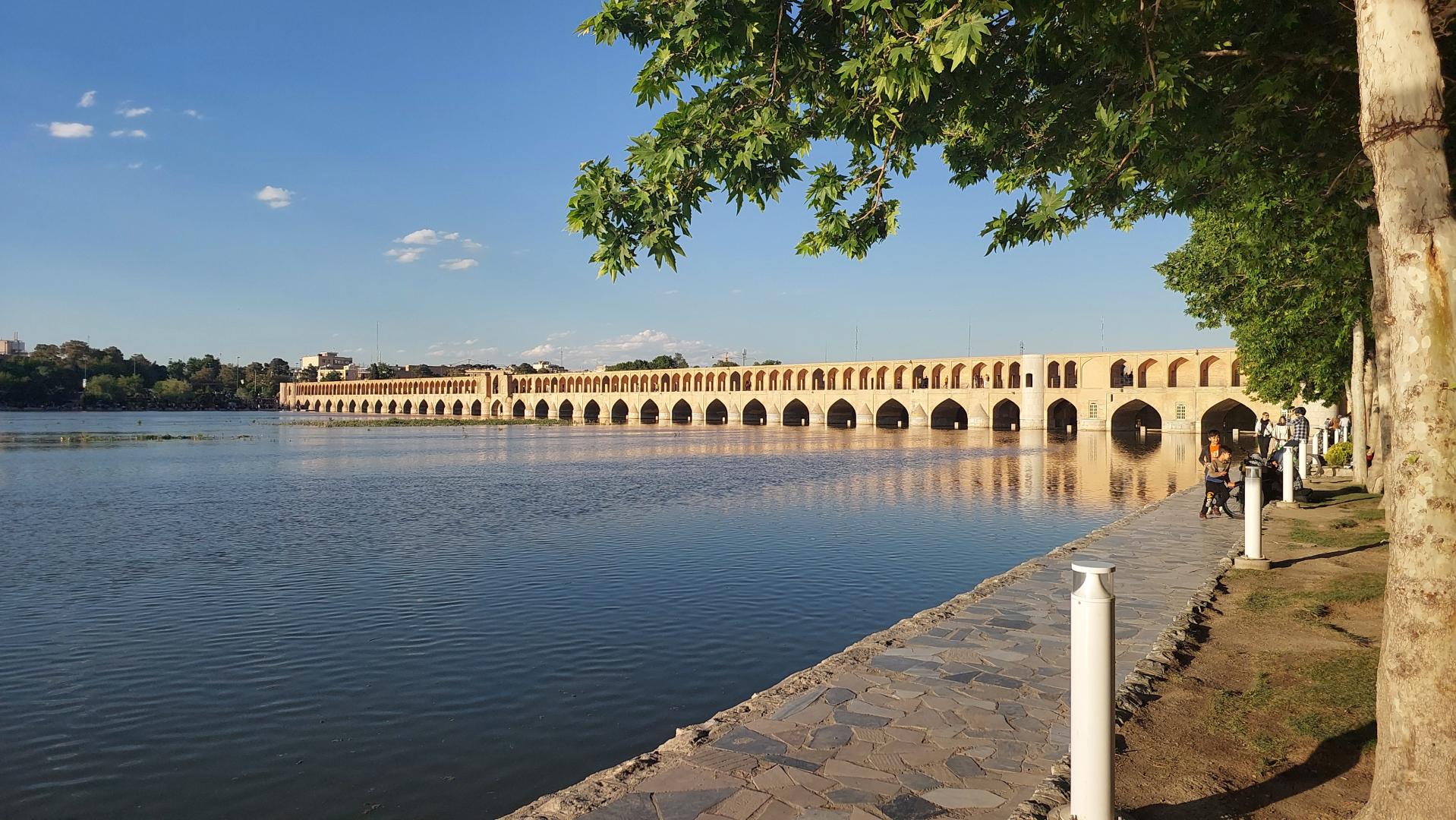
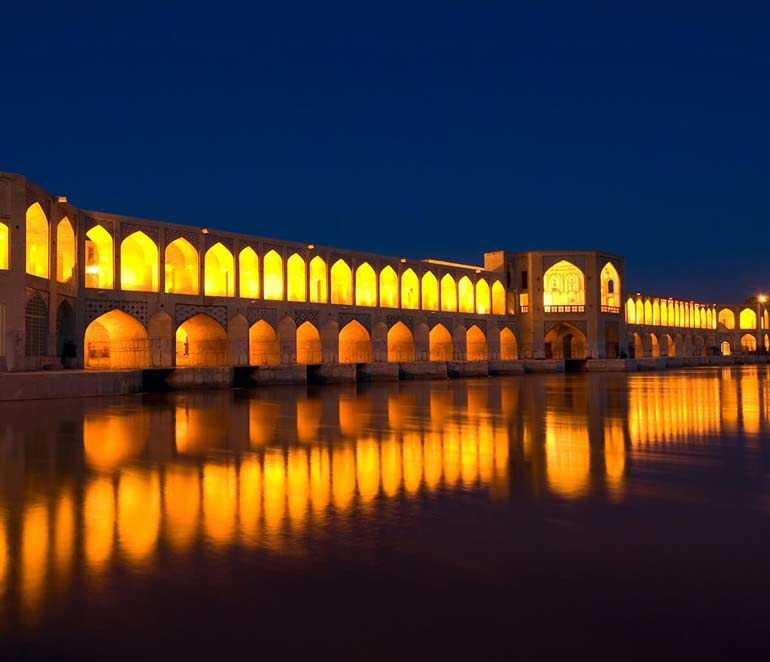
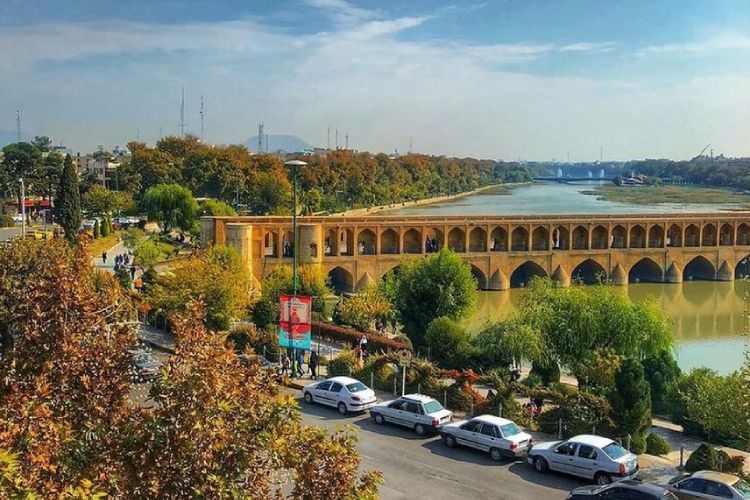
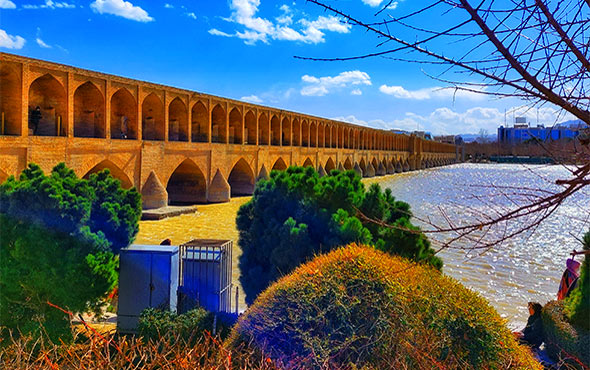
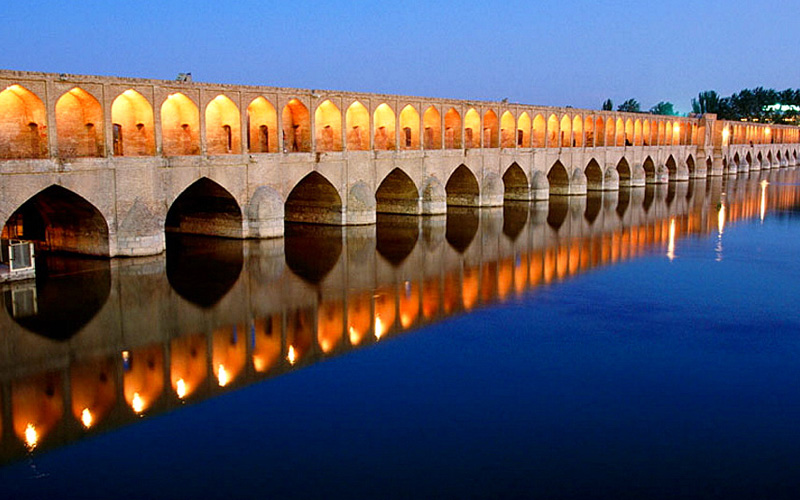
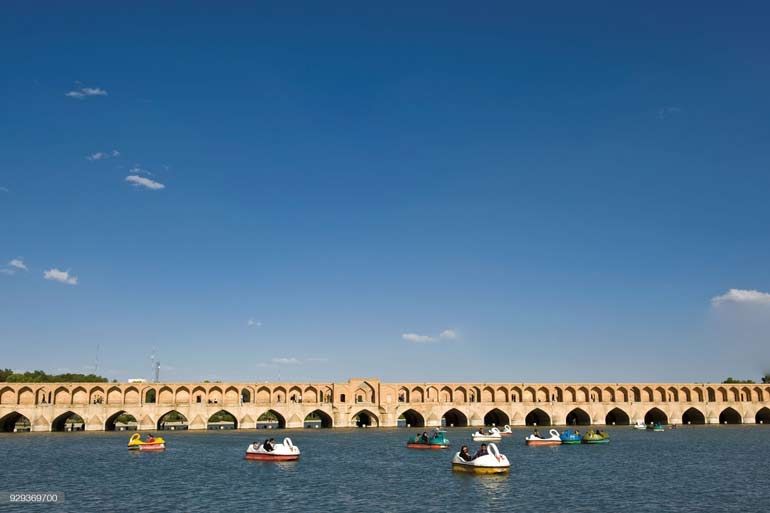
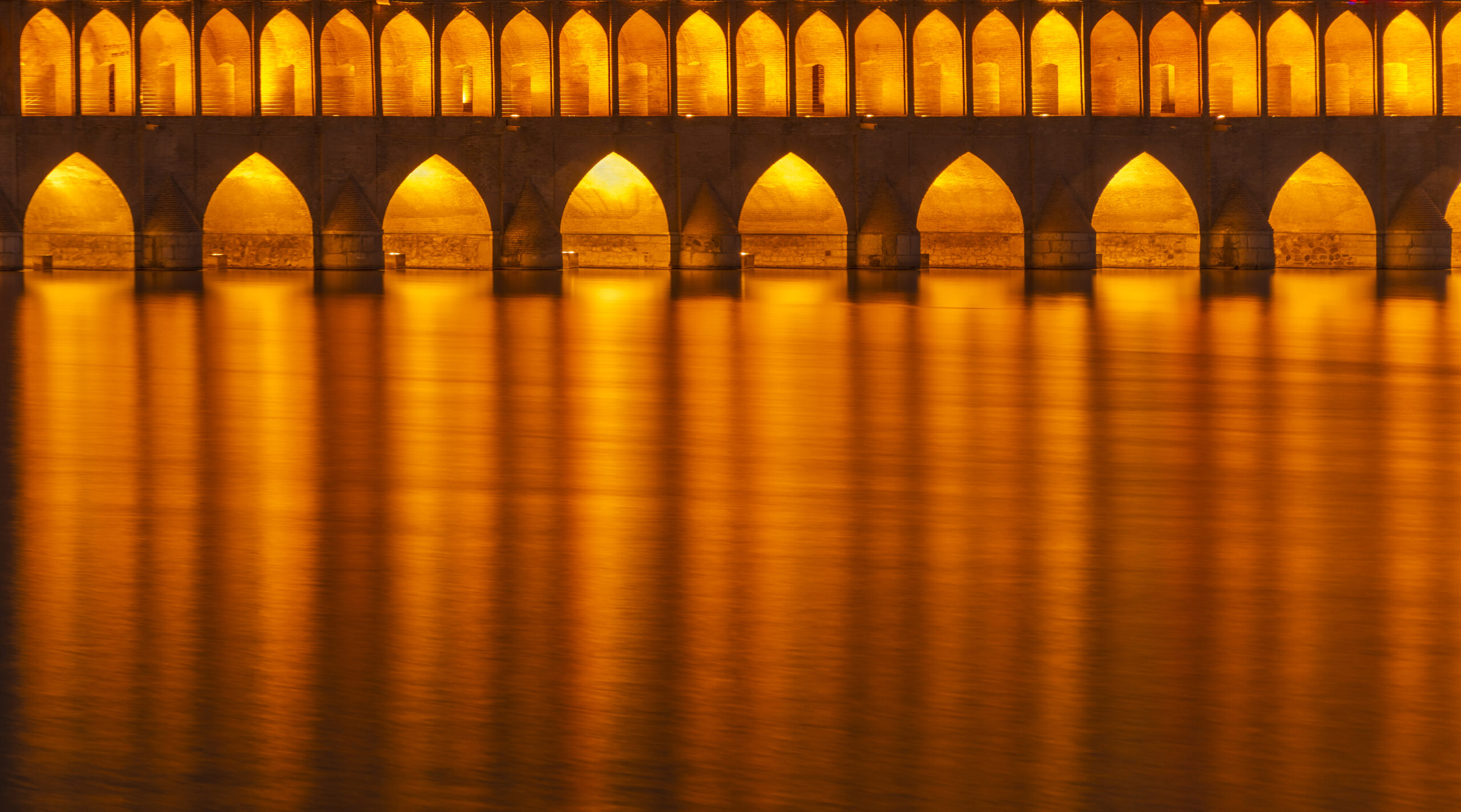
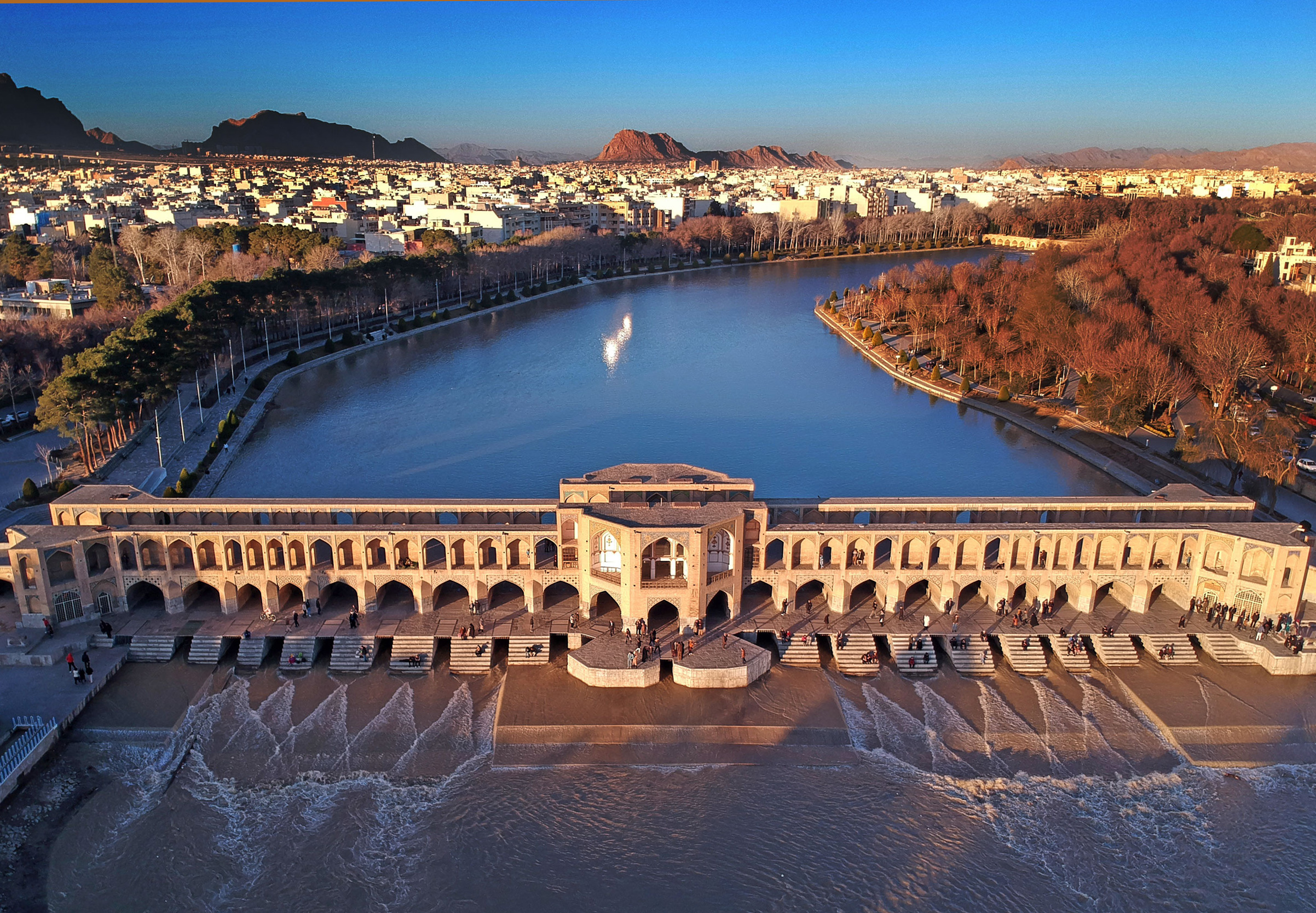
The Allahverdi Khan Bridge , popularly known as Si-o-se-pol (lit. '[the] bridge of thirty-three [spans]’), is the largest of the eleven historical bridges on the Zayanderud, the largest river of the Iranian Plateau, in Isfahan, Iran.
The bridge was built in the early 17th century to serve as both a bridge and a dam.
History
Si-o-se-pol was built between 1599 and 1602,under the reign of Abbas the Great, the fifth shah of Safavid Iran. It was constructed under the supervision of Allahverdi Khan Undiladze, the commander-in-chief of the armies, who was of Georgian origin, and was also named after him.The bridge served particularly as a connection between the mansions of the elite, as well as a link to the city’s vital Armenian neighborhood of New Julfa.
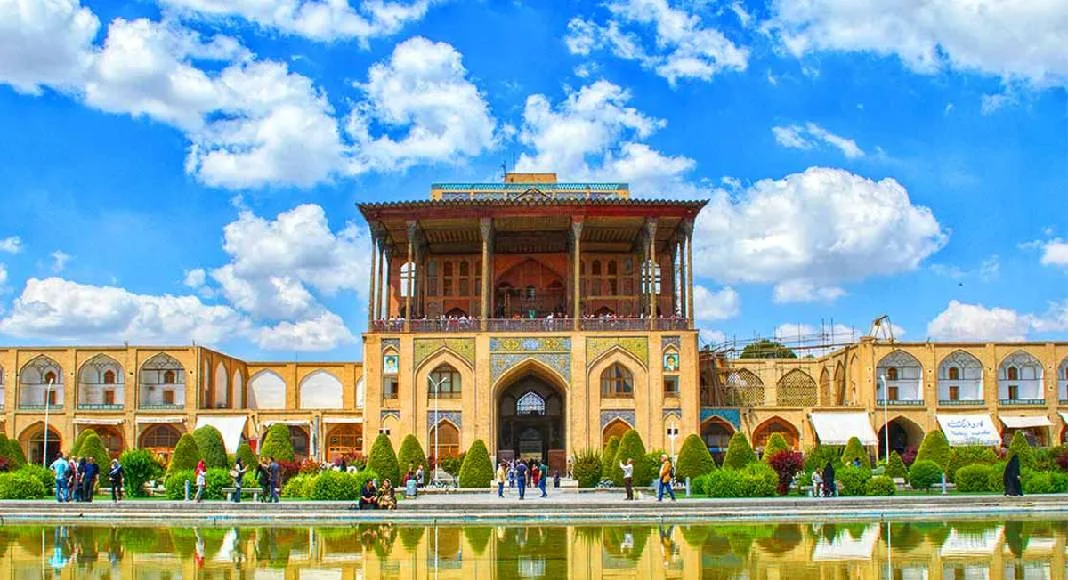
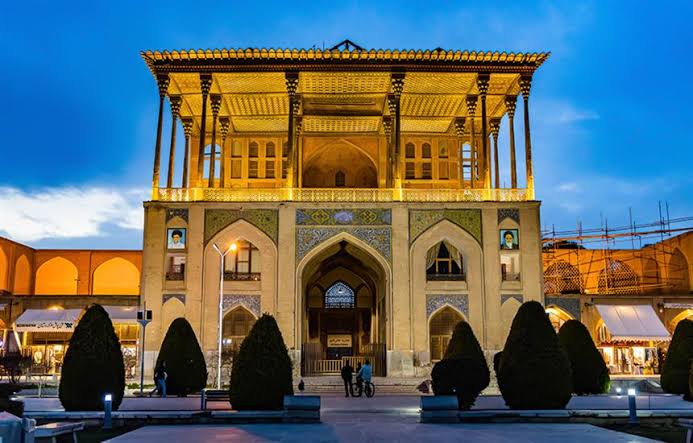
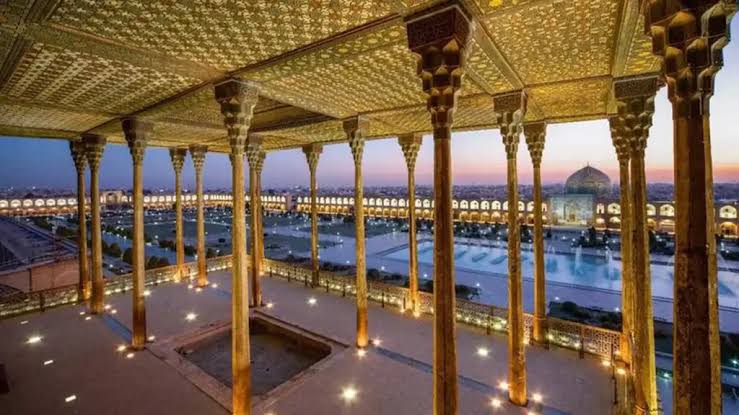
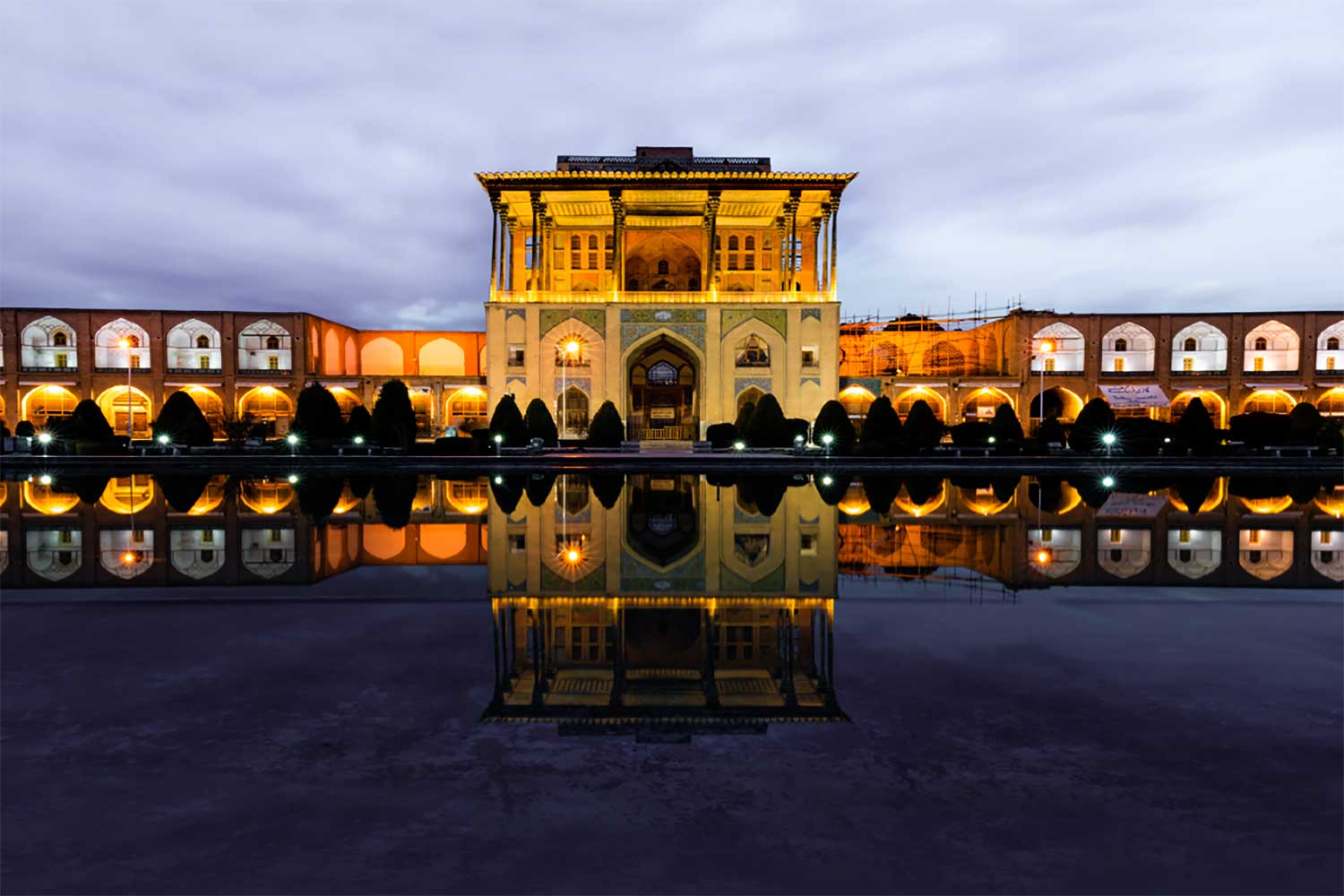
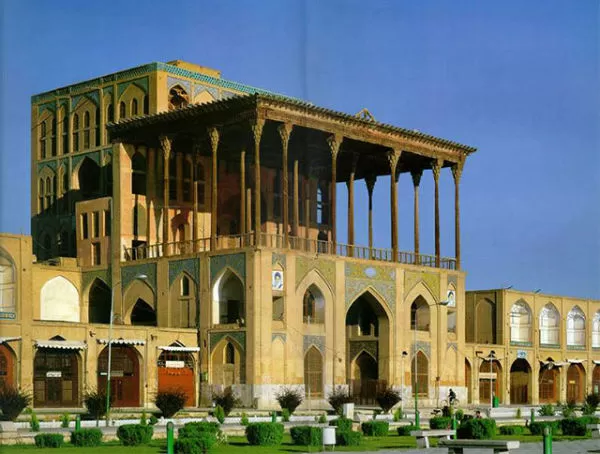
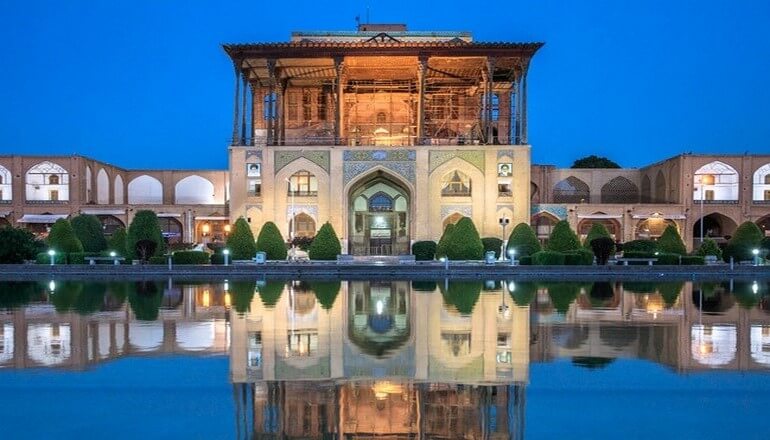
Ali Qapu (romanized: ‘Ālī Qāpū, lit. ’Grand Gate’) is an imperial palace in Isfahan, Iran. It is located on the western side of Naqsh-e Jahan Square, opposite to Sheikh Lotfollah Mosque, and had originally been designed as a vast portal entrance to the grand palace which stretched from the square to Chaharbagh Boulevard. UNESCO inscribed the Palace and the Square as a World Heritage Site due to their cultural and historical importance.
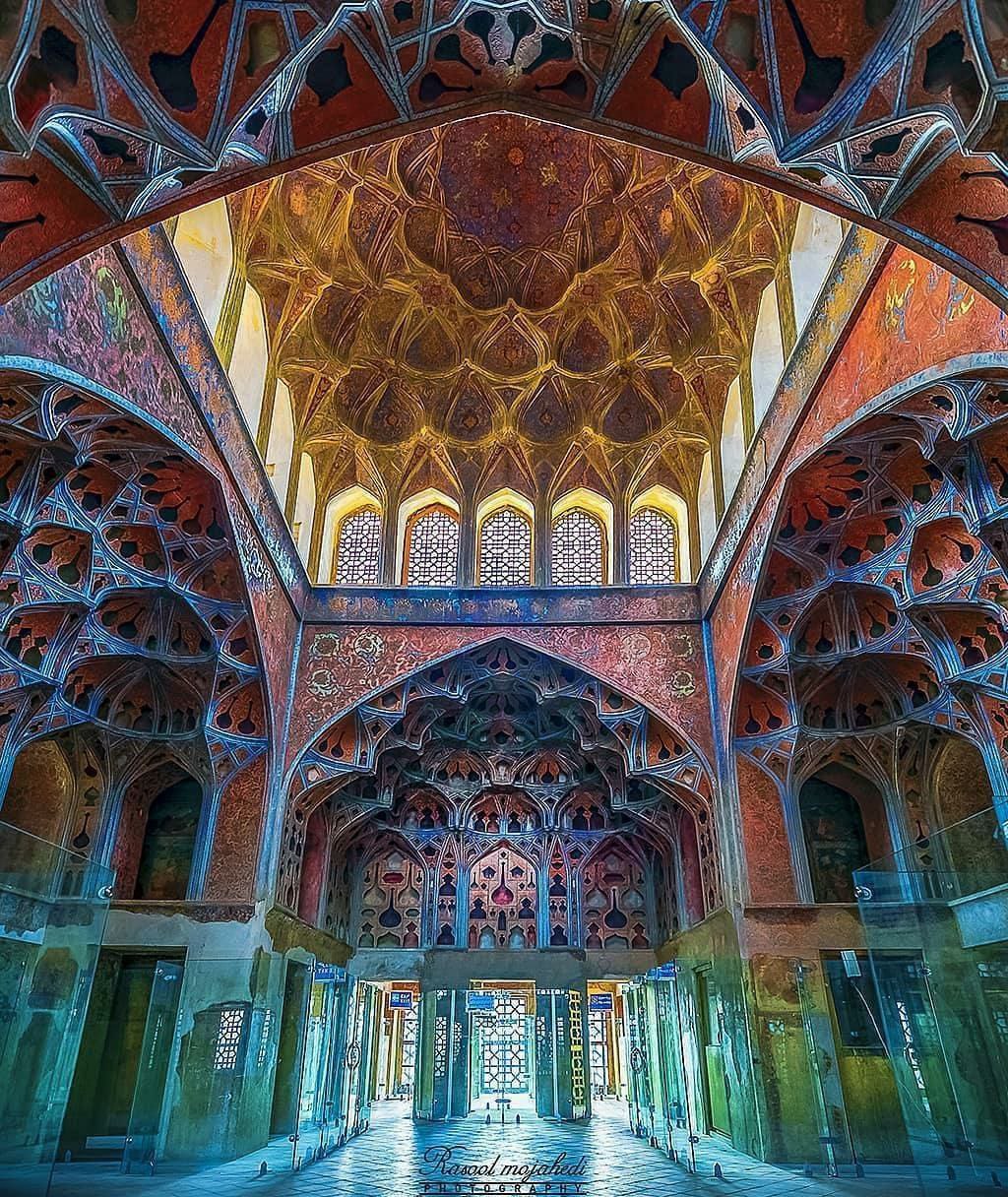
The palace is forty-eight meters high and there are six floors, each accessible by a difficult spiral staircase. In the sixth floor, Music Hall, deep circular niches are found in the walls, having not only aesthetic value, but also acoustic. Ali Qapu is regarded as the best example of Safavid architecture and a symbol of Iran’s Islamic heritage.
Fresco from the portico of the palace, depicting a Persian woman
The name Ali Qapuis is derived from Arabic ‘Ālī (meaning “imperial” or “great”), and Turkic Qāpū (meaning “gate”), was given to this place as it was right at the entrance to the Safavid palaces which stretched from the Naqsh-e Jahan Square to the Chahar Baq Boulevard. The building was built by decree of Shah Abbas the Great in the early 17th century. It was here that the Safavid monarchs used to entertain noble visitors, and foreign ambassadors. Shah Abbas, here for the first time, celebrated the Nowruz (Iranian New Year) of 1006 AH/1597 C.E.