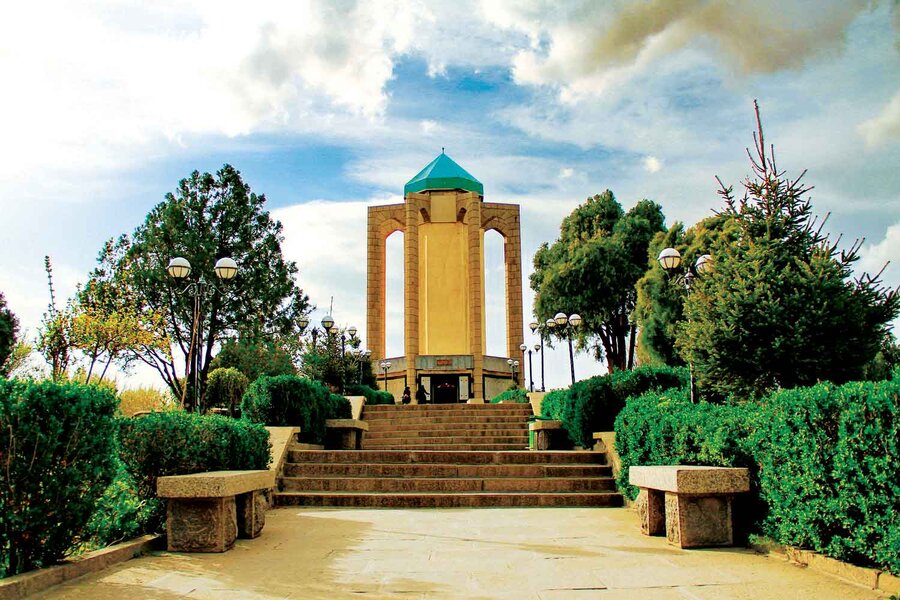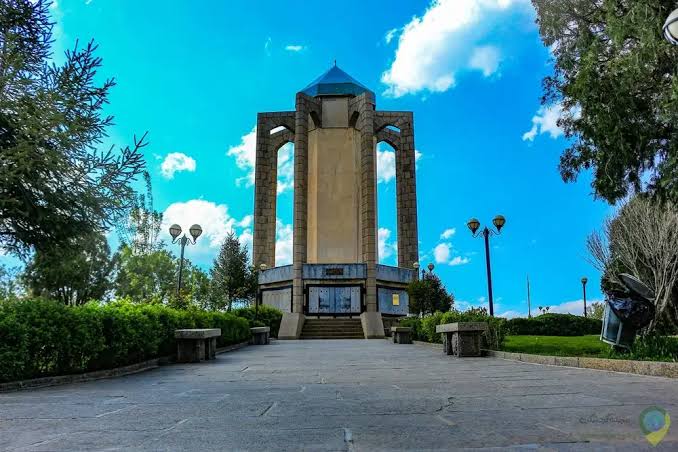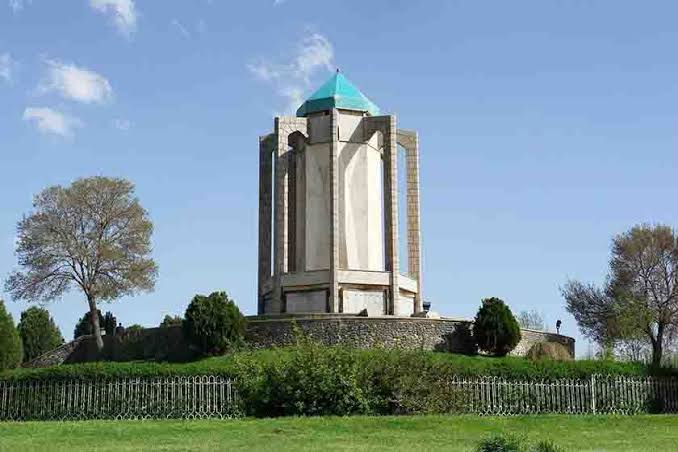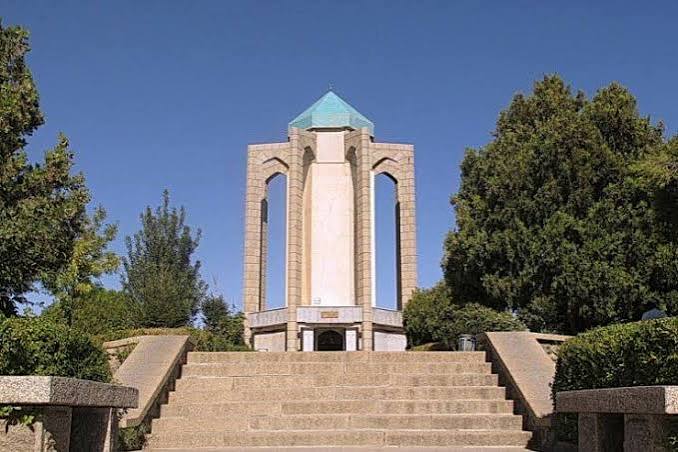
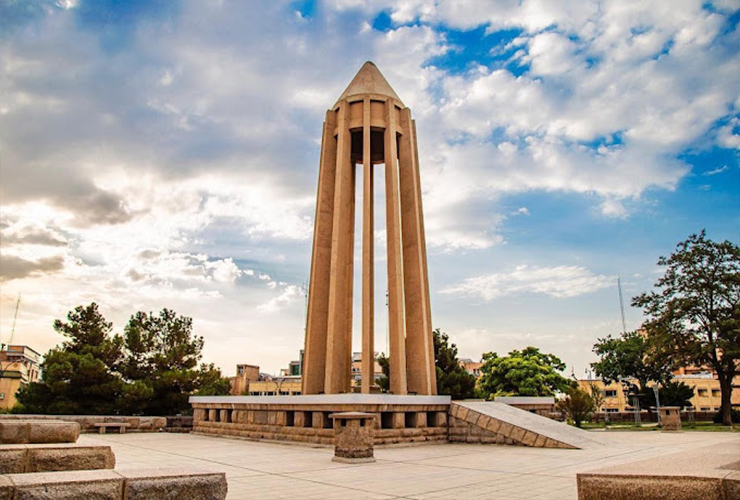
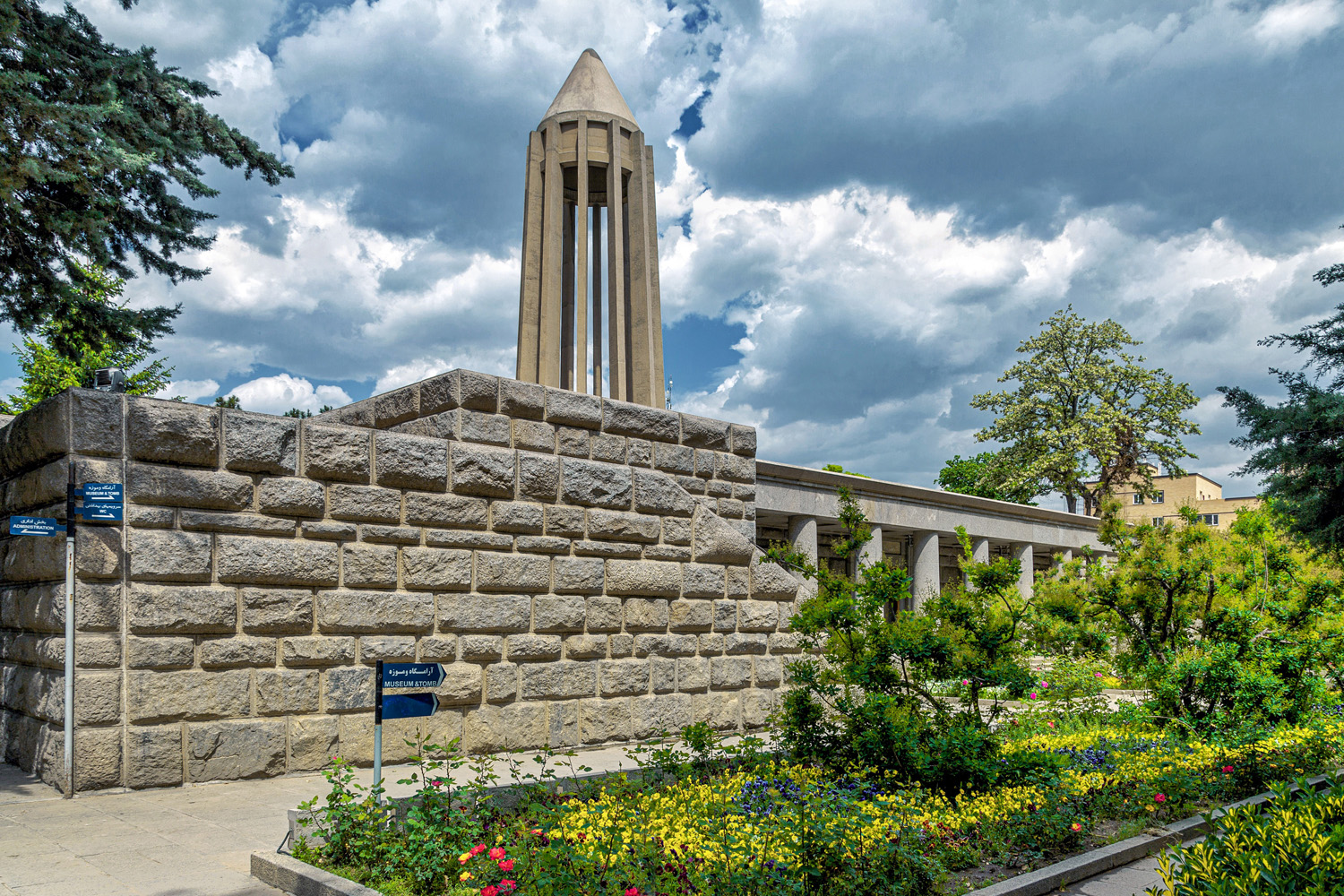
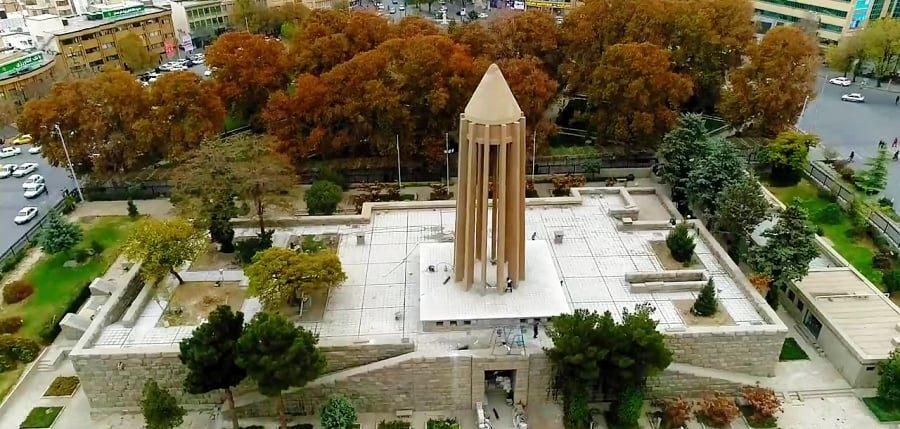
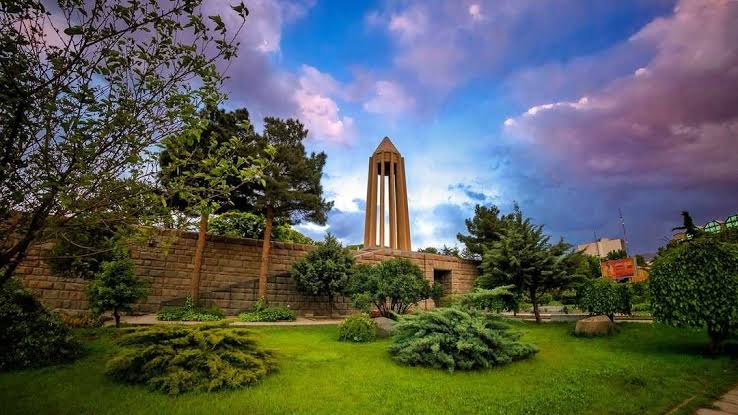
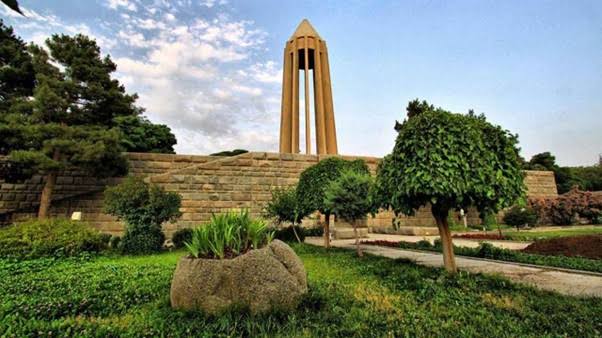
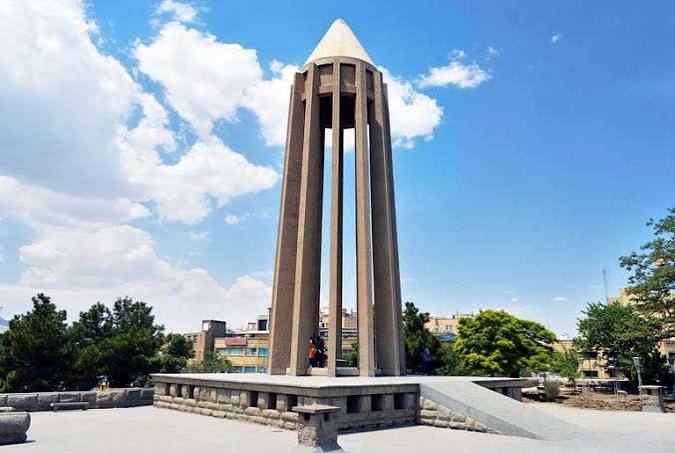
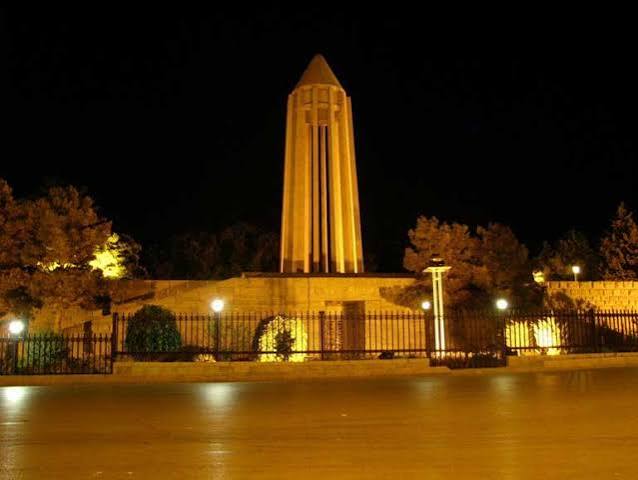
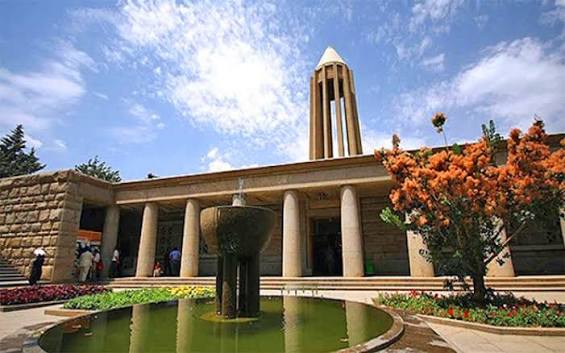
The Mausoleum of Avicenna ( lit. ’Ibn Sina Mausoleum’ , also known as the Tomb of Abu Ali Sina, is a mausoleum and history museum complex, located at Avicenna Square, in the city of Hamadan, in the province of Hamadan, Iran. Dedicated to the Persian polymath Avicenna, the complex includes a library, a small museum, and a spindle-shaped 28-metre-high (92 ft) tower inspired by the Ziyarid-era Kavus Tower.
The mausoleum and museum complex was added to the Iran National Heritage List on 11 May 1997 and is administered by the Cultural Heritage, Handicrafts and Tourism Organization of Iran.
History
The primary building of the mausoleum was built in the Qajar era.
The Pahlavi government had plans to build the mausoleum since at least 1939. Houshang Seyhoun won competitions for the mausoleums of Ferdowsi and Avicenna before heading to France. He completed his training at the Ecole des Beaux-Arts in 1948 with the project “Le mausolée d’Avicenne à Hamadan.” The mausoleum was eventually dedicated in a grand ceremony in May 1954, on the occasion of the philosopher’s millennial birth anniversary, and the avenue running in front of it was also renamed in honor of Avicenna.
The museum contains ancient relics, bronze statues related to the 1st millennium BCE, gourds, coins, beads, and articles of silver related to the Sassanide era. The library contains an anthropology section, and books of Avicenna.
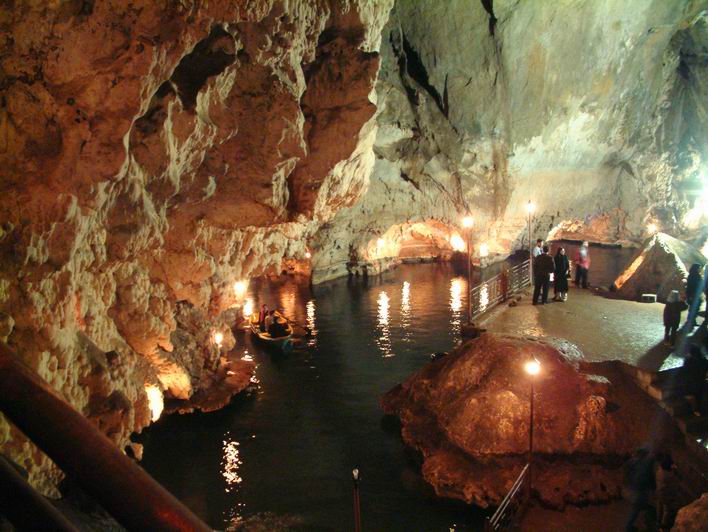
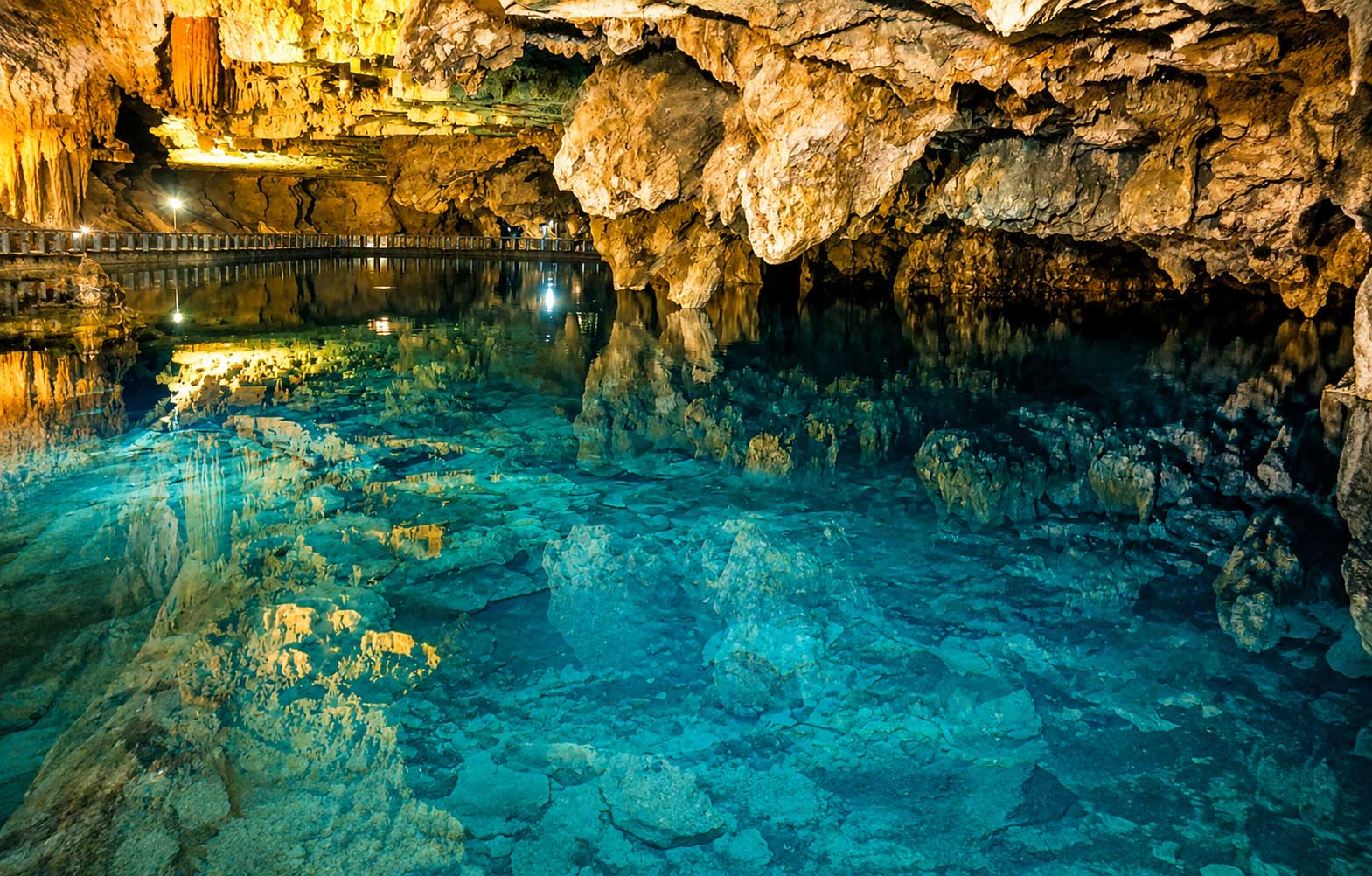
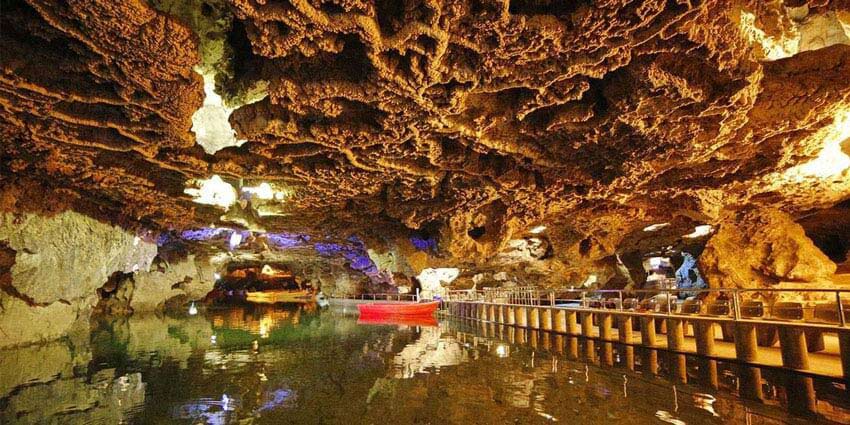
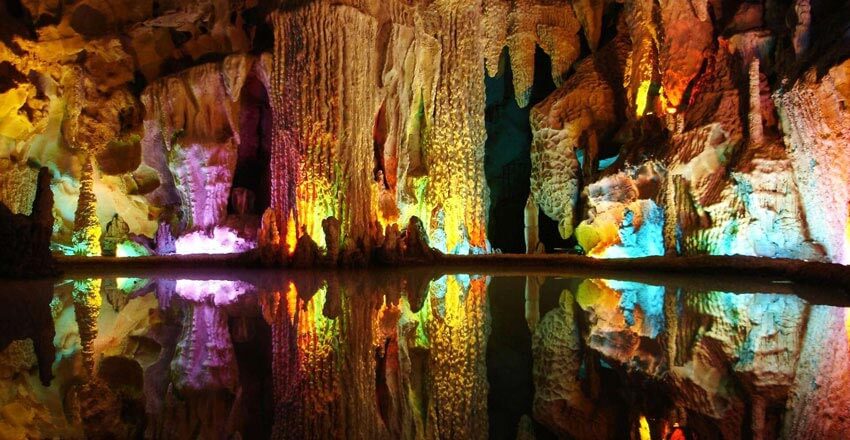
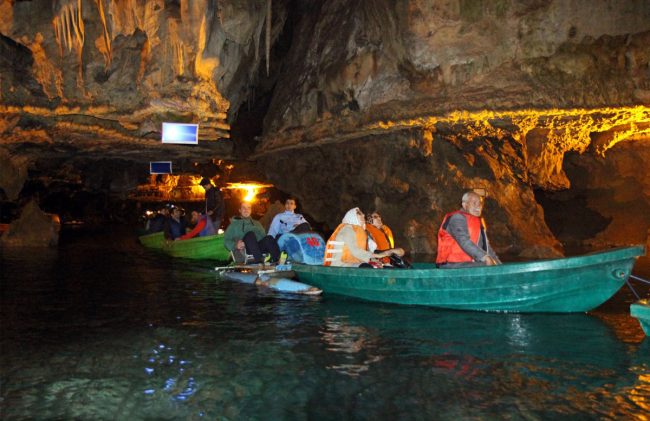
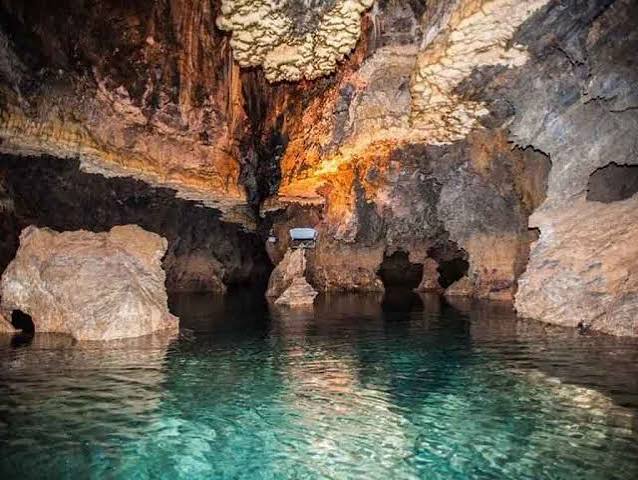
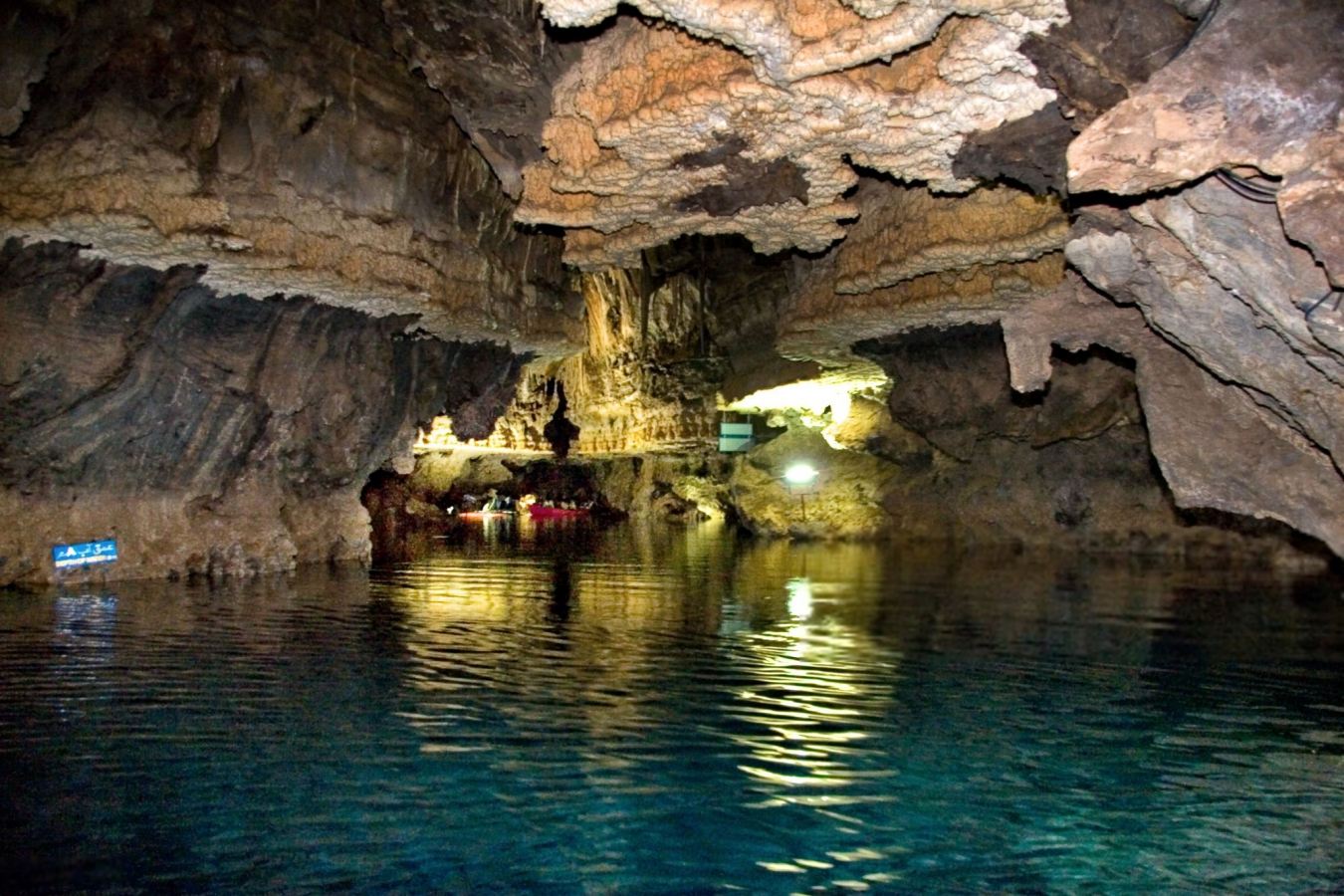
The Ali-Sadr Cave , originally called Ali Saadr or Ali Sard (meaning cold), is a water cave which attracts visitors every year.It is located in Ali Sadr, Kabudarahang County, about 100 kilometres (62 mi) north of Hamadan, western Iran.
Faces of discovers, engraved on a stone board near cave entrance
Ali Sadr cave information :
This cave is located at 48°18’E 35°18’N, in the southern part of Ali Sadr village.
In the summer of 2001, a German/British expedition surveyed the cave, finding to be 11.44 kilometres (7.11 mi).
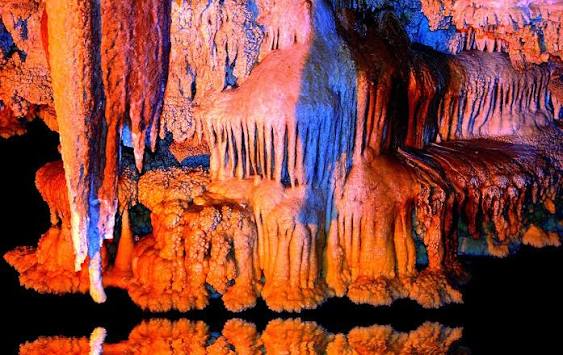
The cave has been nominated as a World Heritage Site by the Iranian Cultural Heritage, Handicrafts and Tourism Organization. In their submission they describe Ali Sadr as having “too many water halls and wide variety of beautiful features such as stalactites, stalagmites and carst deposits with various forms. This with about 2400 M in cave boating is the biggest cave in the world from this respect.
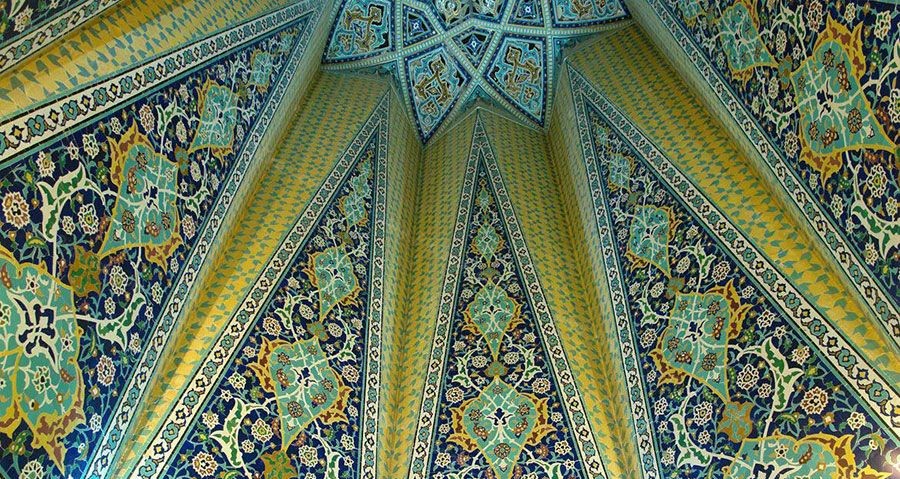
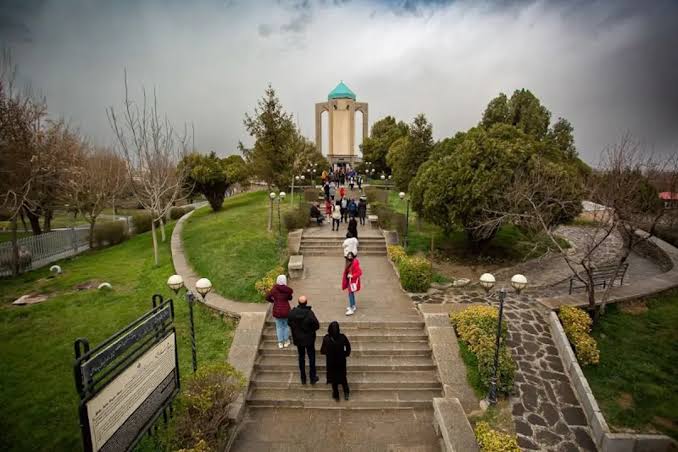
The Mausoleum of Baba Taher Oryan dates back to the contemporary era and is located at Baba Taher Square in Hamedan; it was registered as a National Heritage site of Iran on May 11, 1997 (registration number 1870). Its current architectural style blends modern Iranian design with traditional Iranian architecture.
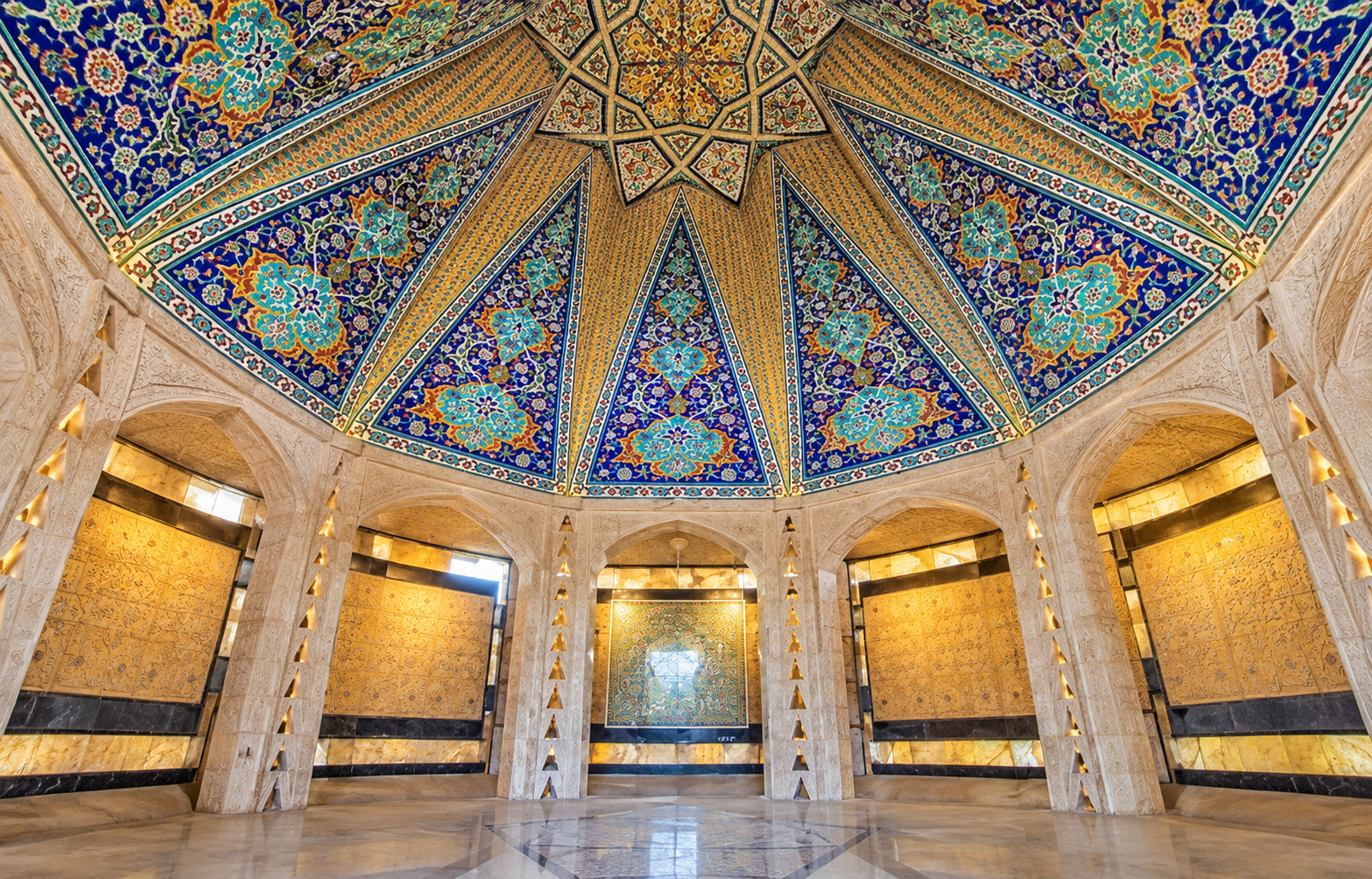
Background
Baba Taher, who lived during the late 4th and early 5th centuries AH, was a renowned poet and mystic of his time. He is celebrated as one of Iran’s most famous composers of *do-bayti* (quatrains). In addition to these quatrains, other literary works by Baba Taher have survived, including two *qet’ehs* (short poems), several *ghazals* (lyric poems), a collection of Arabic aphorisms, and a book titled *Saranjam*. Inside the mausoleum, twenty-four quatrains are inscribed on twenty-four beautiful stone panels mounted along the lower walls of the interior chamber.