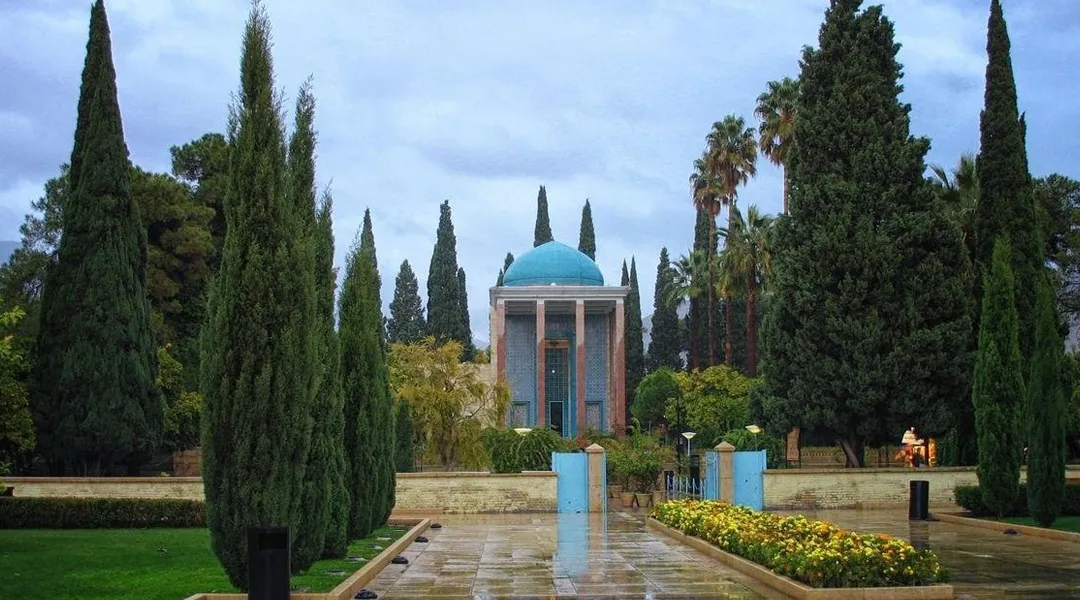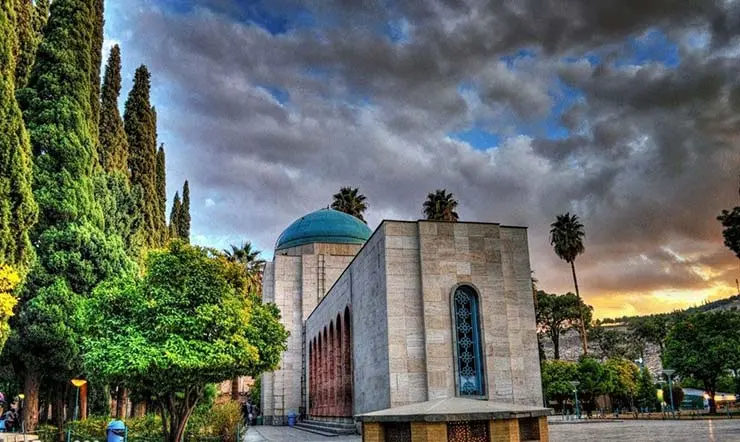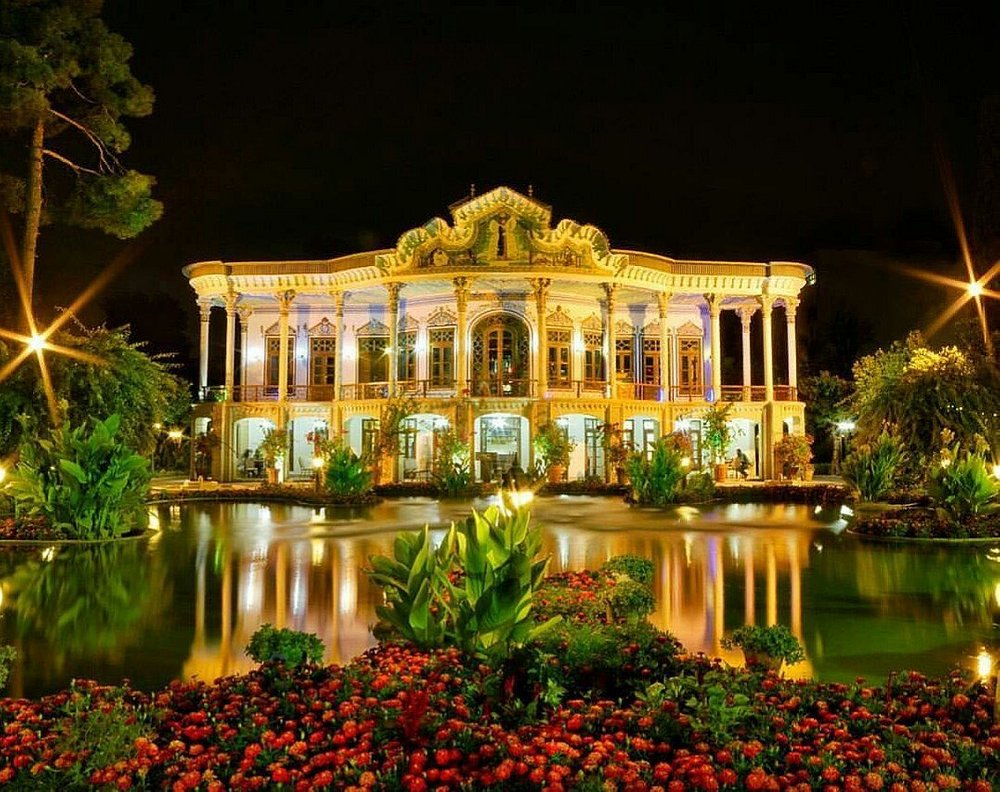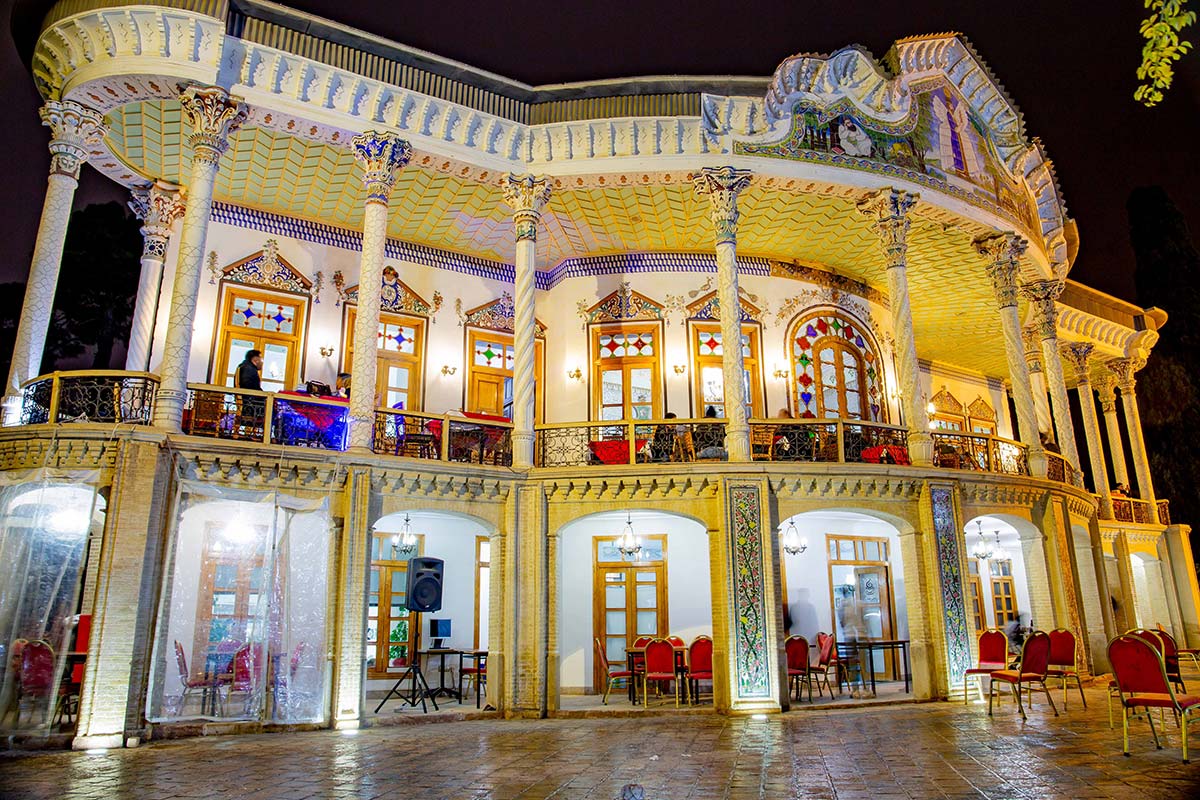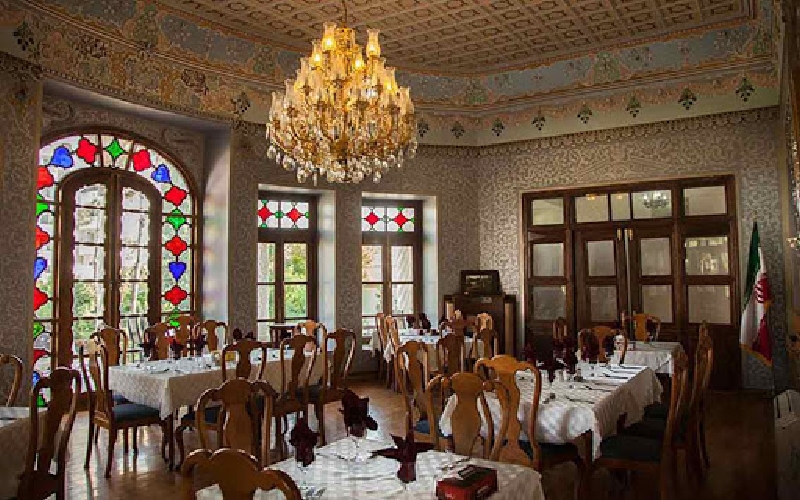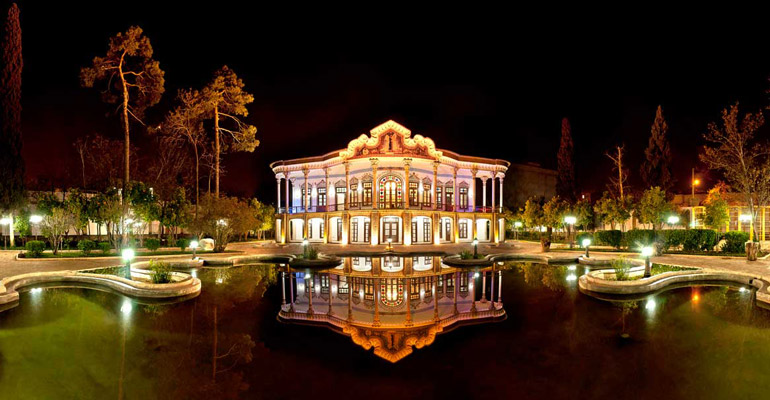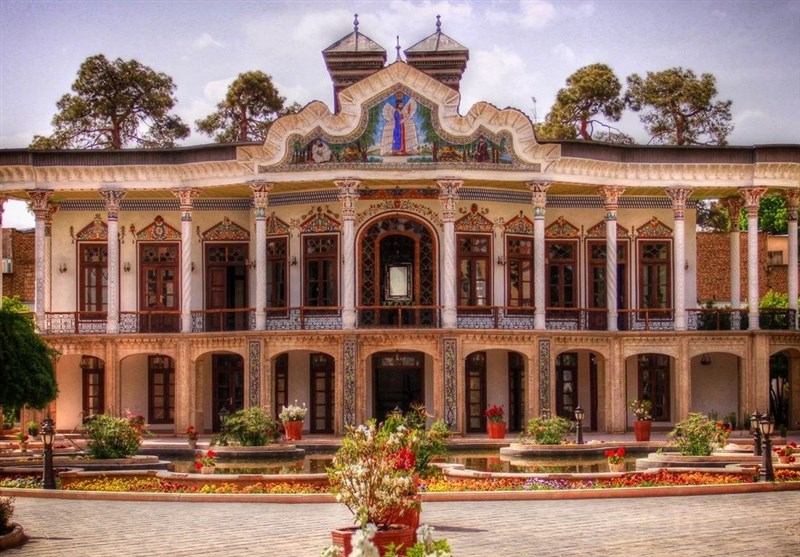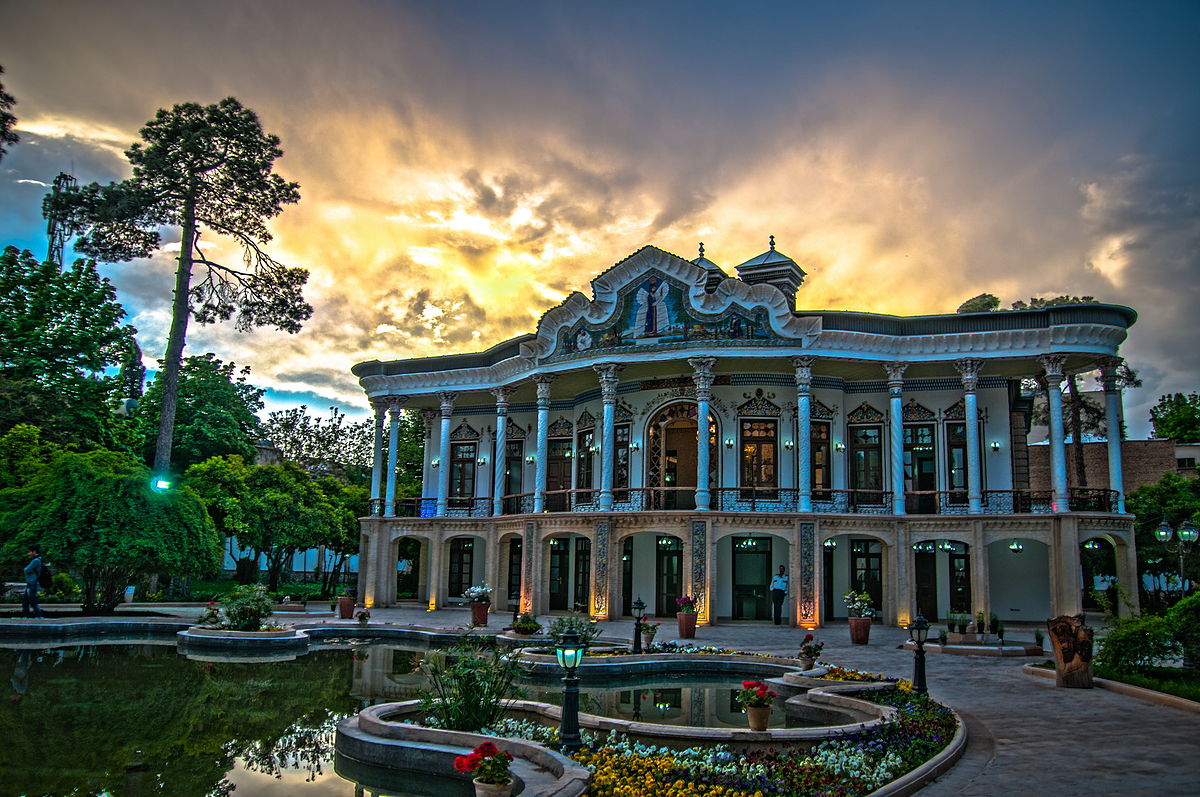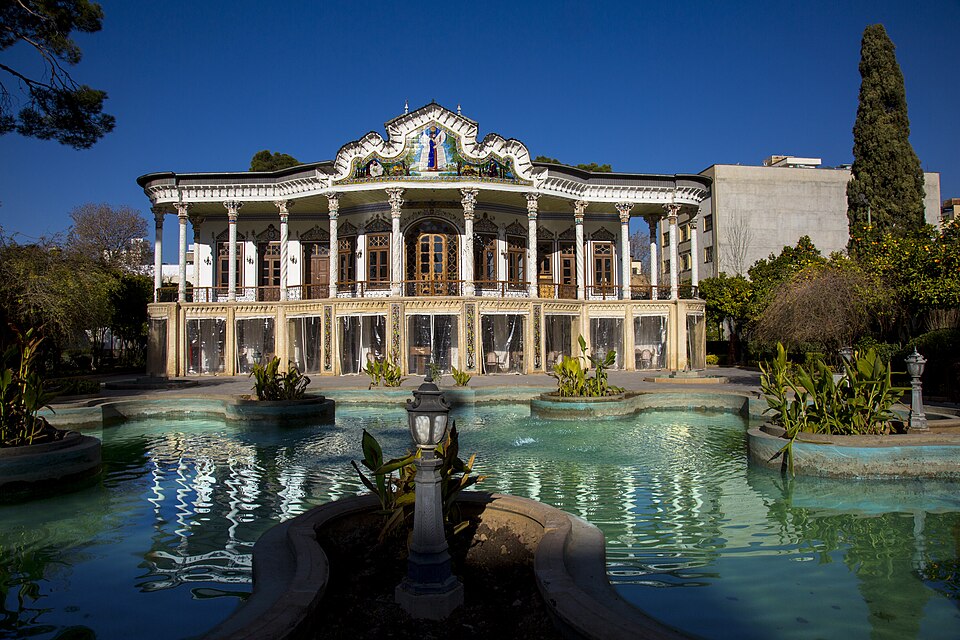
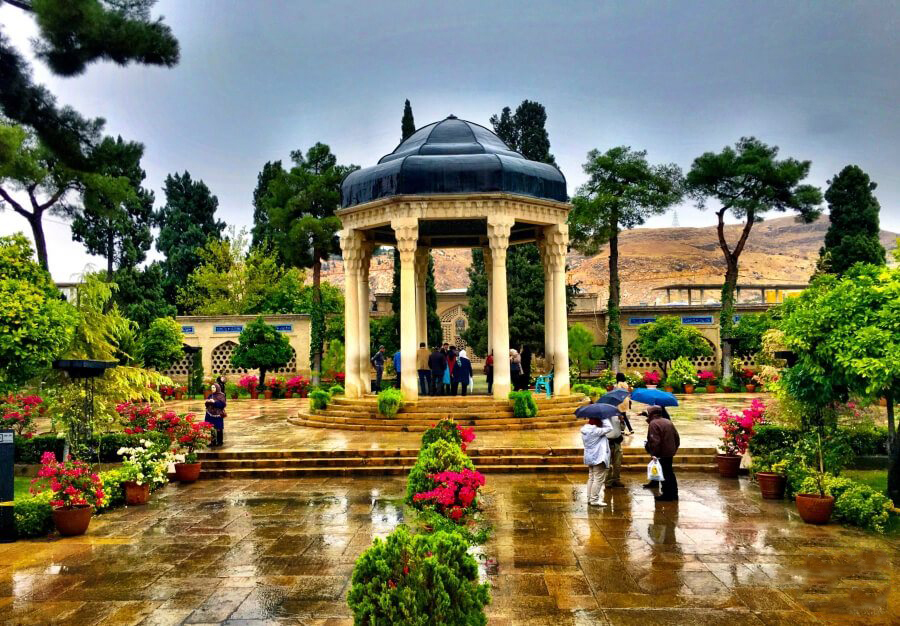
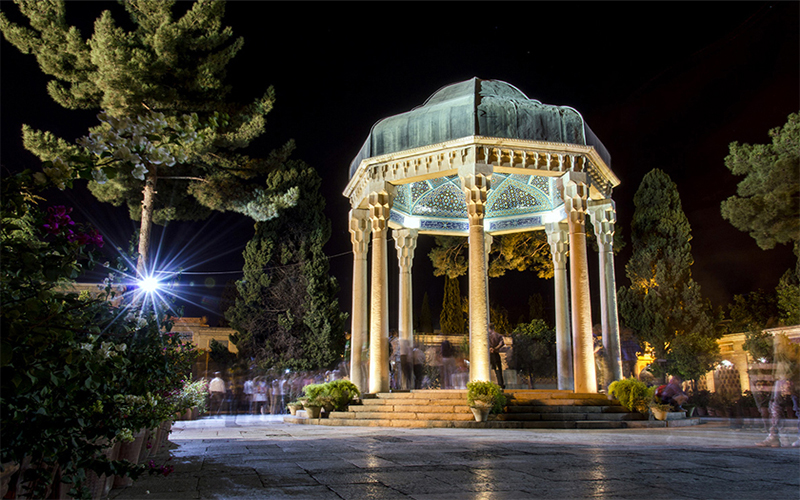
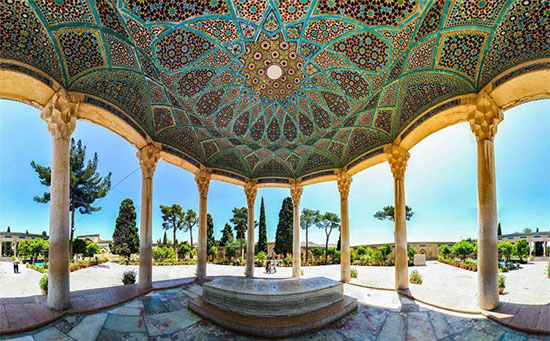
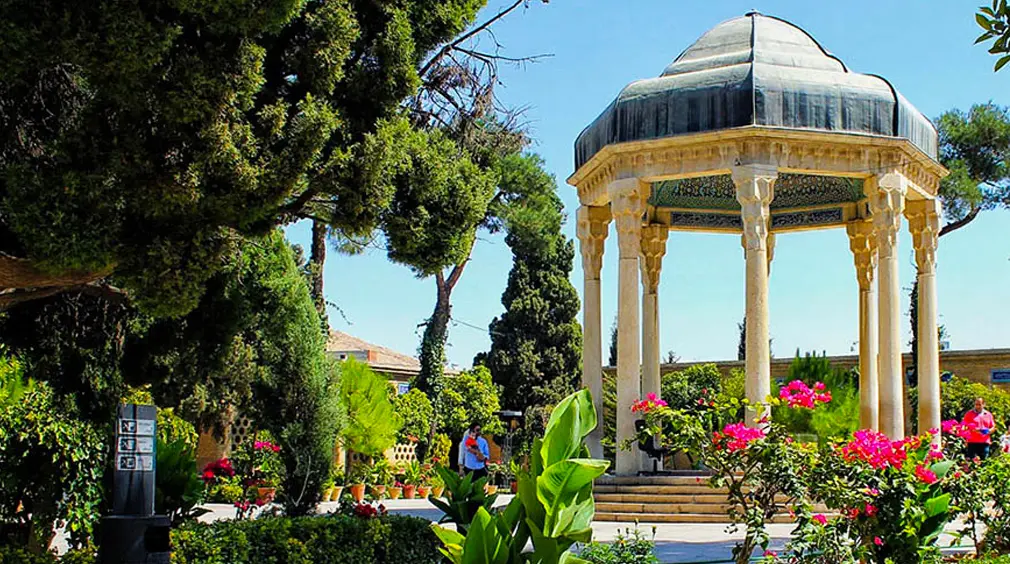
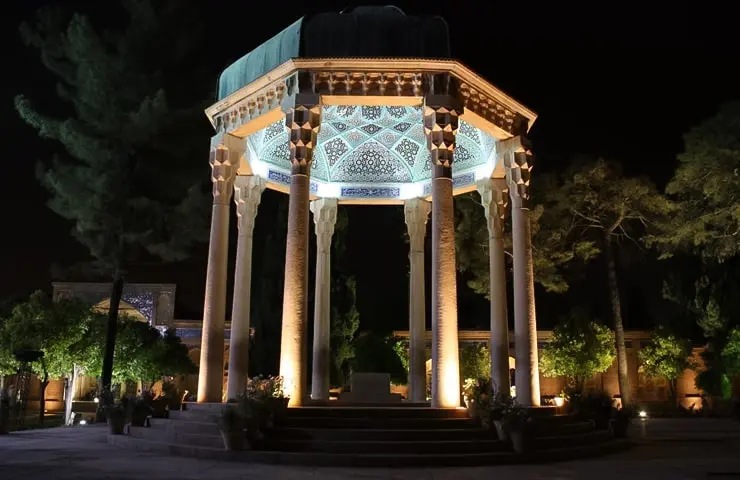
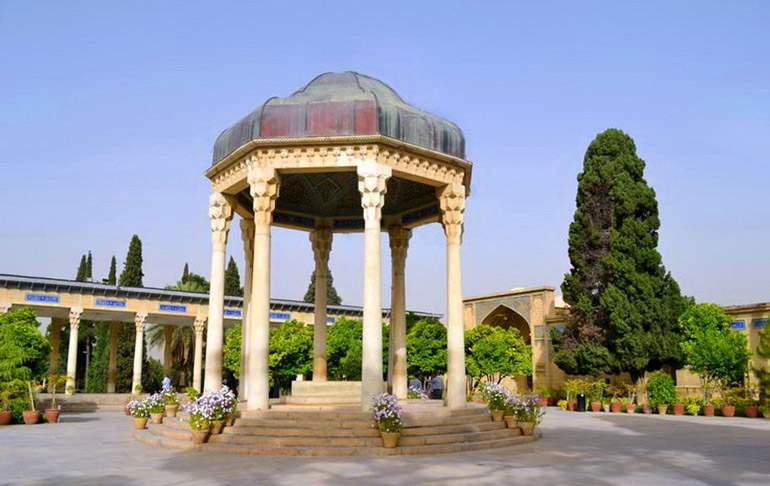
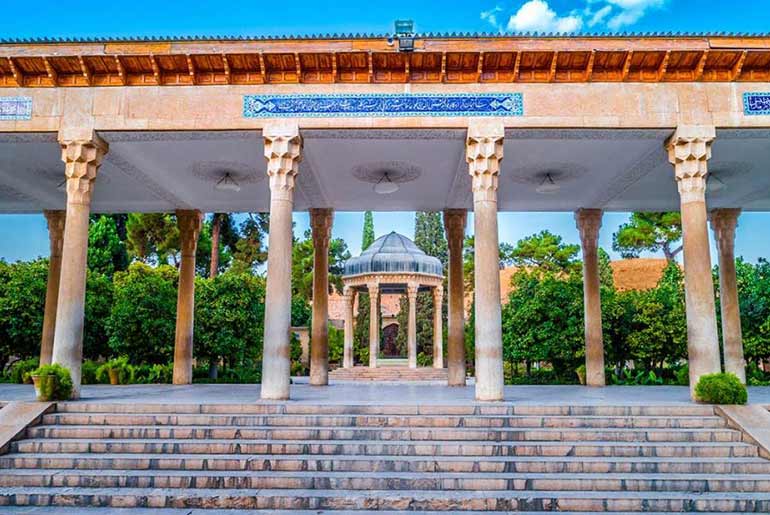
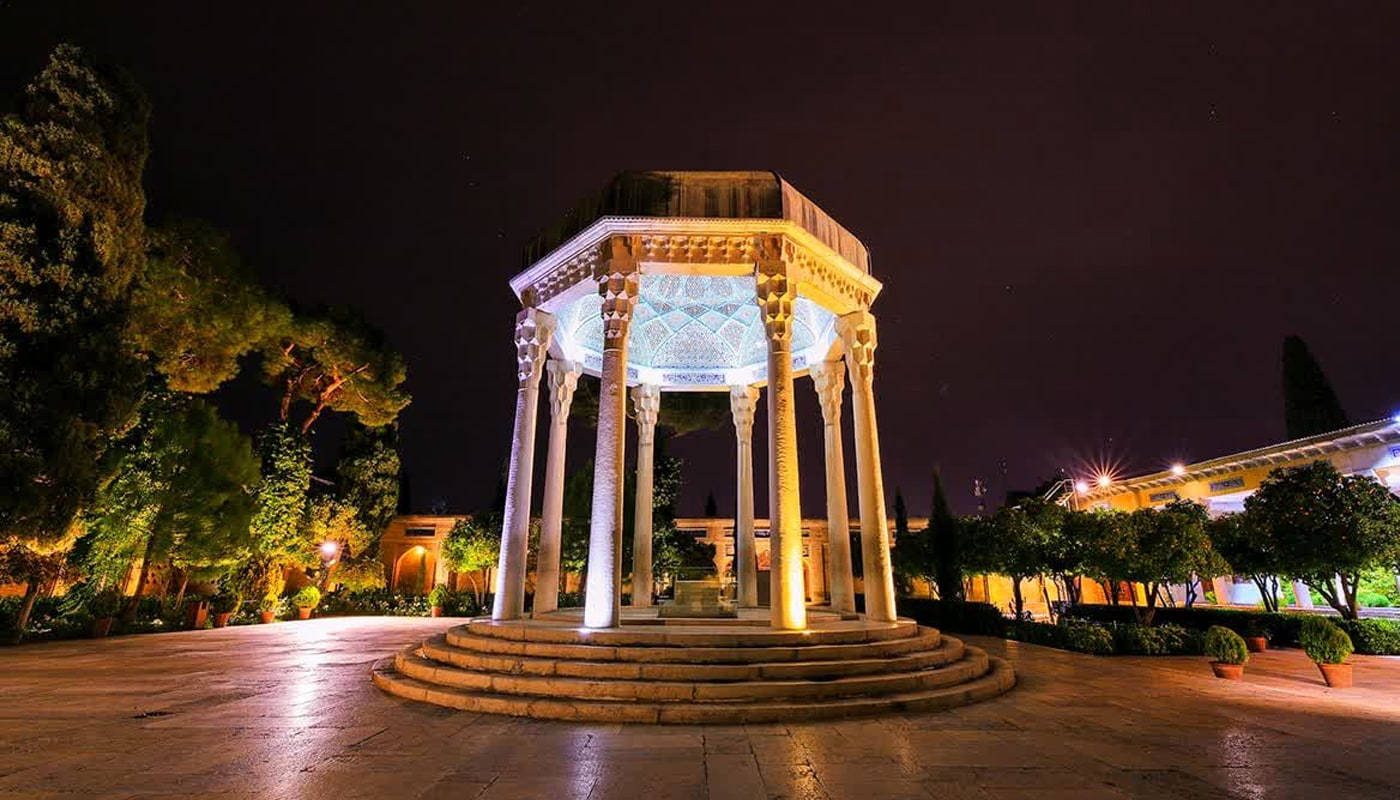
The Tomb of Hafez , commonly known as Hāfezieh, are two memorial structures erected in the northern edge of Shiraz, Iran, in memory of the celebrated Persian poet Hafez. The open pavilion structures are situated in the Musalla Gardens on the north bank of a seasonal river and house the marble tomb of Hafez. The present buildings, built in 1935 and designed by the French architect and archaeologist André Godard, are at the site of previous structures, the best-known of which was built in 1773. The tomb, its gardens, and the surrounding memorials to other great figures are a focus of tourism in Shiraz.
History
Hafez was born in Shiraz in 1315 and died there in 1390. A beloved figure of the Iranian people, who learn his verses by heart, Hafez was prominent in his home town and held a position as the court poet. In his memory, a small, dome-like structure was erected in Shiraz near his grave at Golgast-e Mosalla in 1452, by the order of Abul-Qasim Babur Mirza, a Timurid governor. The Golgast-e Mosalla were gardens (now known as Musalla Gardens) that featured in Hafez’s poetry. With a surface of over 19,000 square metres, the gardens were also home to one of Shiraz’s cemeteries, and Babur had a pool built here at the same time as the memorial. Believing they were ordered by omens in Hafez’s poetry, Abbas the Great and Nader Shah both carried out separate restoration projects in the following 300 years.
A much more substantial memorial was constructed in the gardens in 1773, during the reign of Karim Khan Zand. Situated on the north bank of the seasonal Rudkhaneye Khoshk river in the Musalla Gardens, the Hāfezieh consisted of four central columns, with two rooms built at the east and west end and with the north and south sides remaining open. The building split the gardens into two sections, with the orange grove in the front and the cemetery in the back. The actual tomb was outside of the structure, in the middle of the cemetery, with a marble slab placed over the grave. The marble was engraved by a calligrapher with excerpts from Hafez’s poetry.
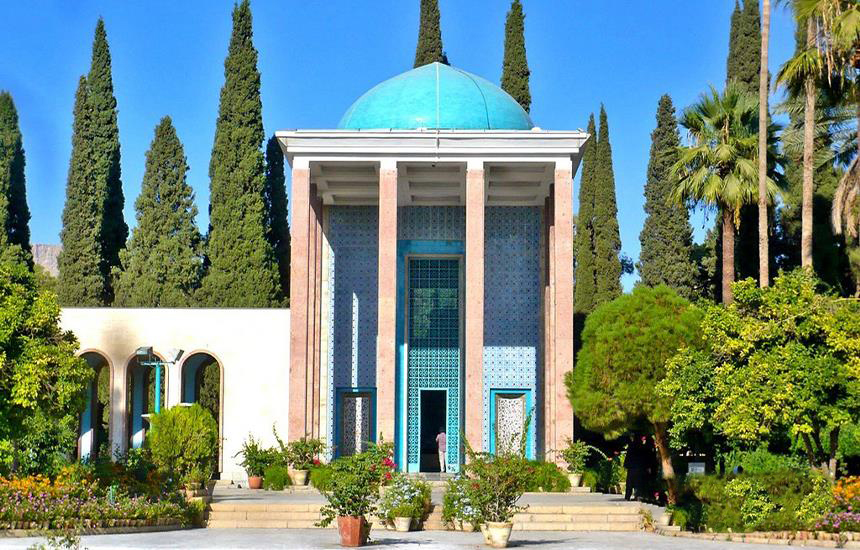
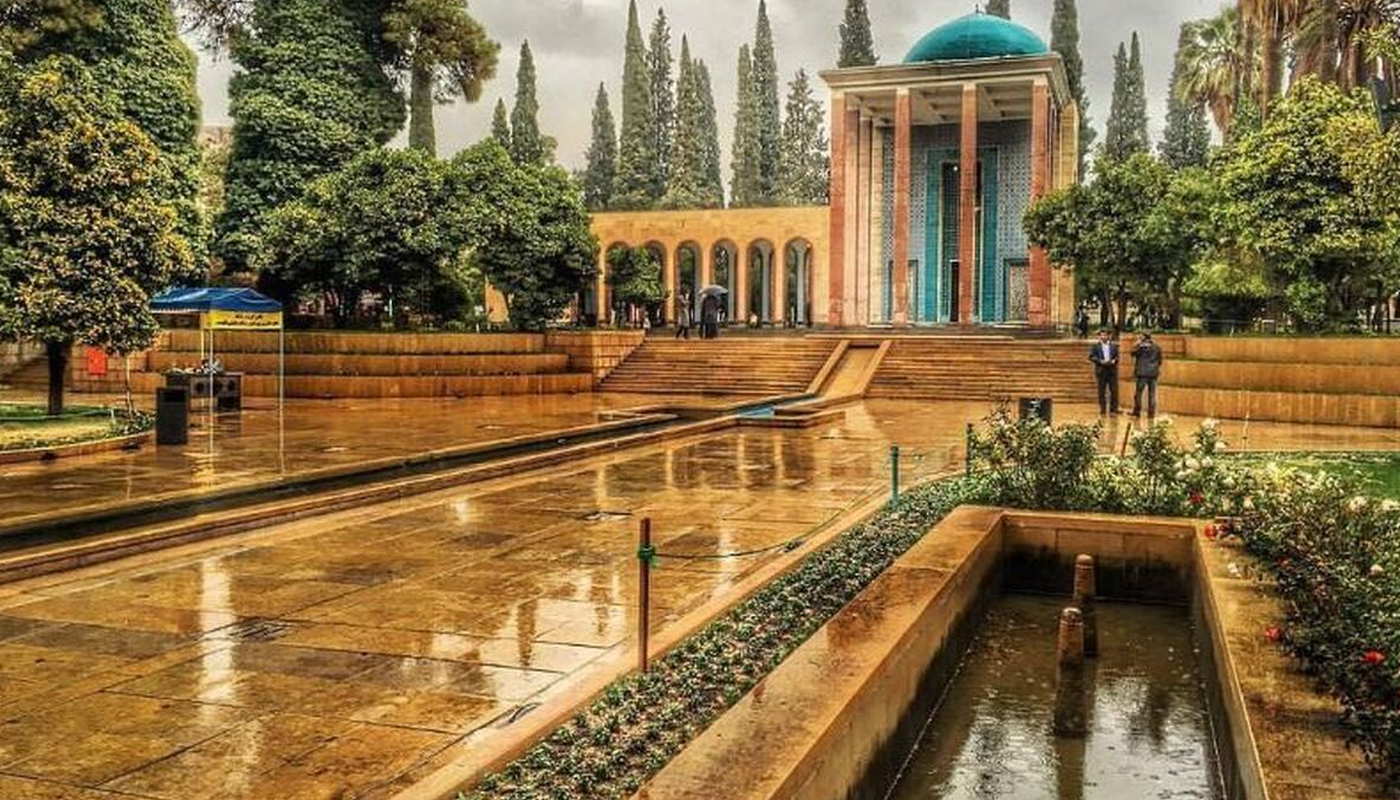
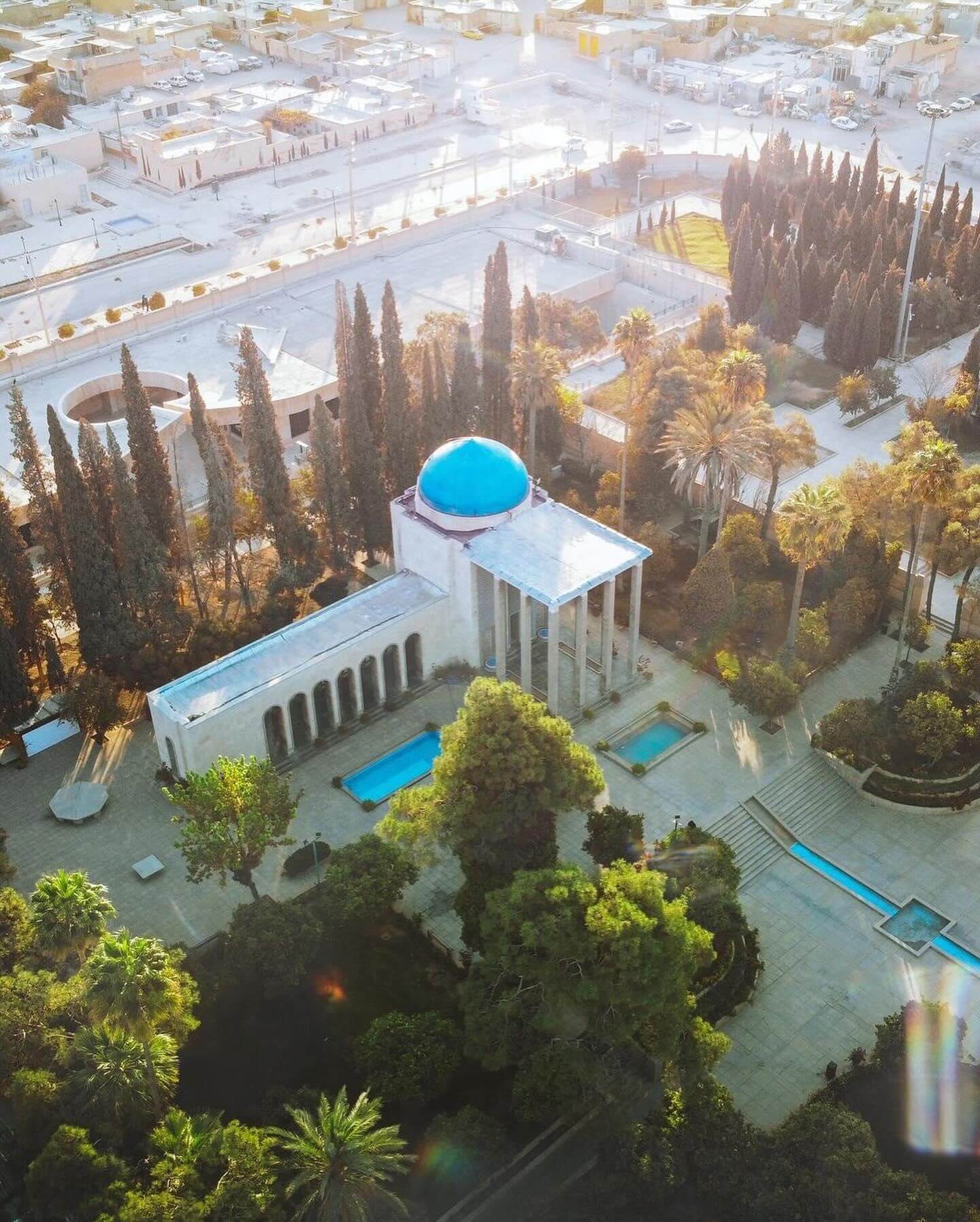
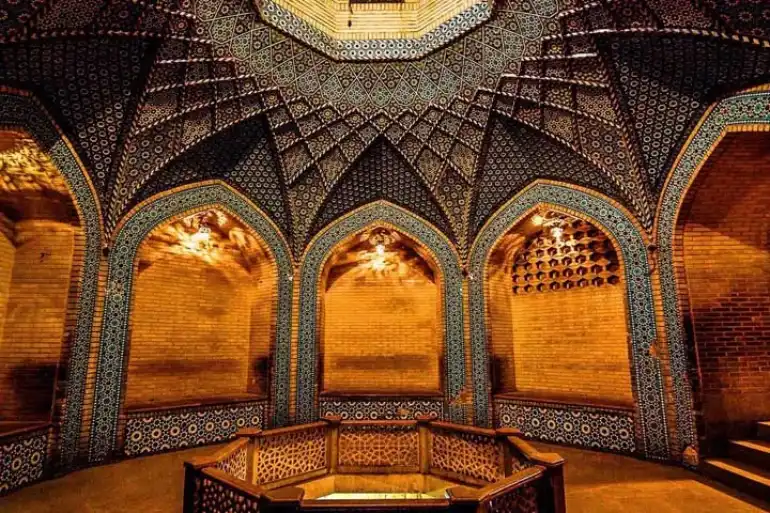
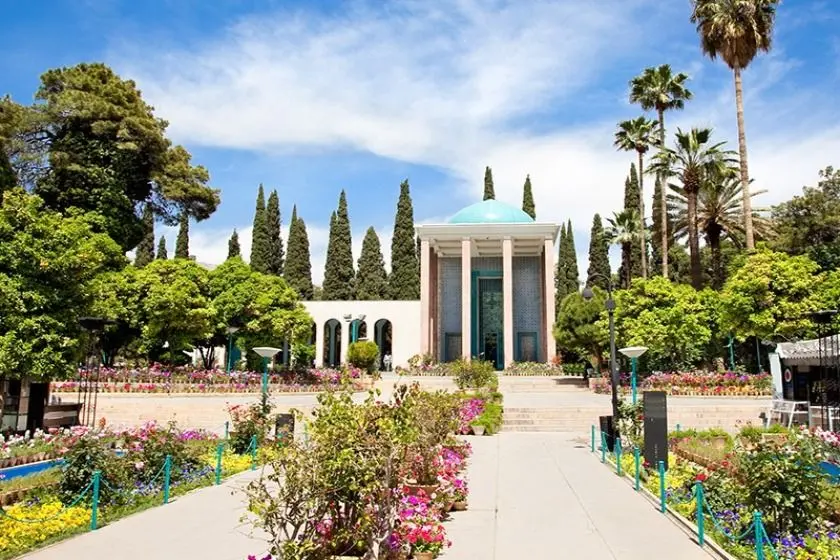
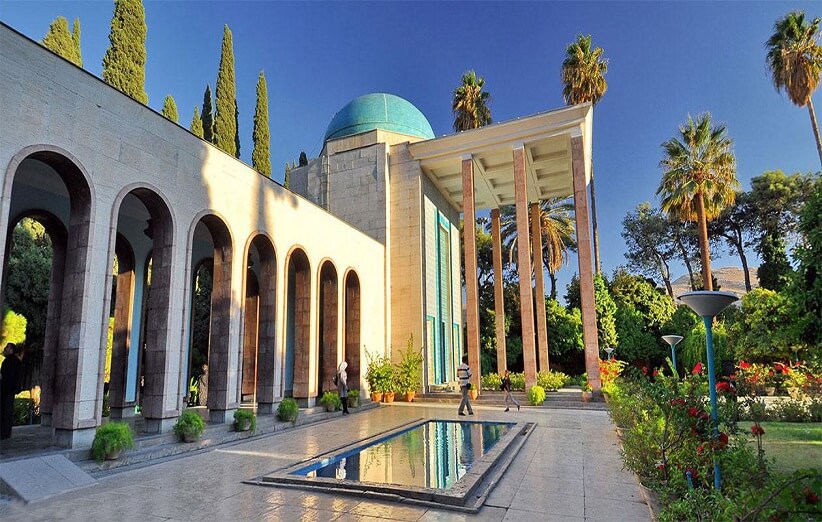
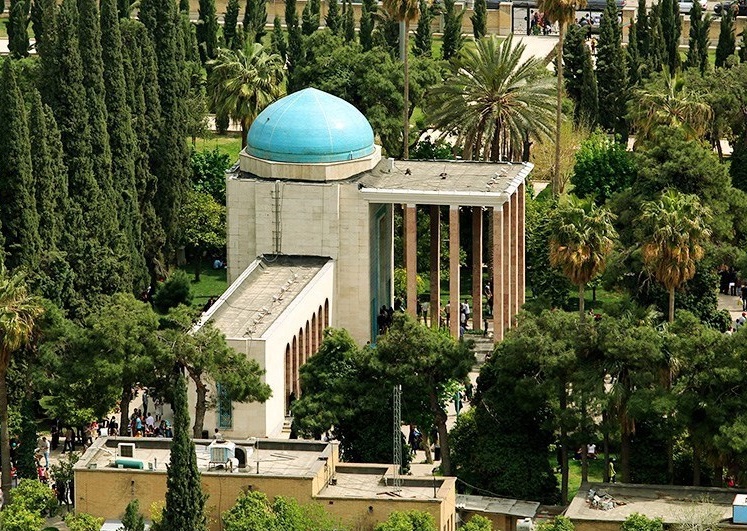
The Tomb of Saadi is a tomb and mausoleum complex dedicated to the Persian poet Saadi, commonly known as Saadieh . The complex is located in the city of Shiraz, in the province of Fars, Iran.
The complex was added to the Iran National Heritage List on 9 December 1975, administered by the Cultural Heritage, Handicrafts and Tourism Organization of Iran.
History
Saadi was buried at the end of his life at a khanqah at the current location. In the 13th century, a tomb was built for Saadi by Shams al-Din Juvayni, the vizir of Abaqa Khan. In the 17th century, this tomb was destroyed. During the reign of Karim Khan Zand, a mausoleum of two floors of brick and plaster, flanked by two rooms, was built.The current building was constructed between 1950 and 1952 to a design by the architect Mohsen Foroughi and was inspired by the Chehel Sotoun with a fusion of old and new architectural elements. Around the tomb on the walls are seven verses of Saadi’s poems.